The Future of Work: How HR Strategies Are Changing in 2026
 Introduction
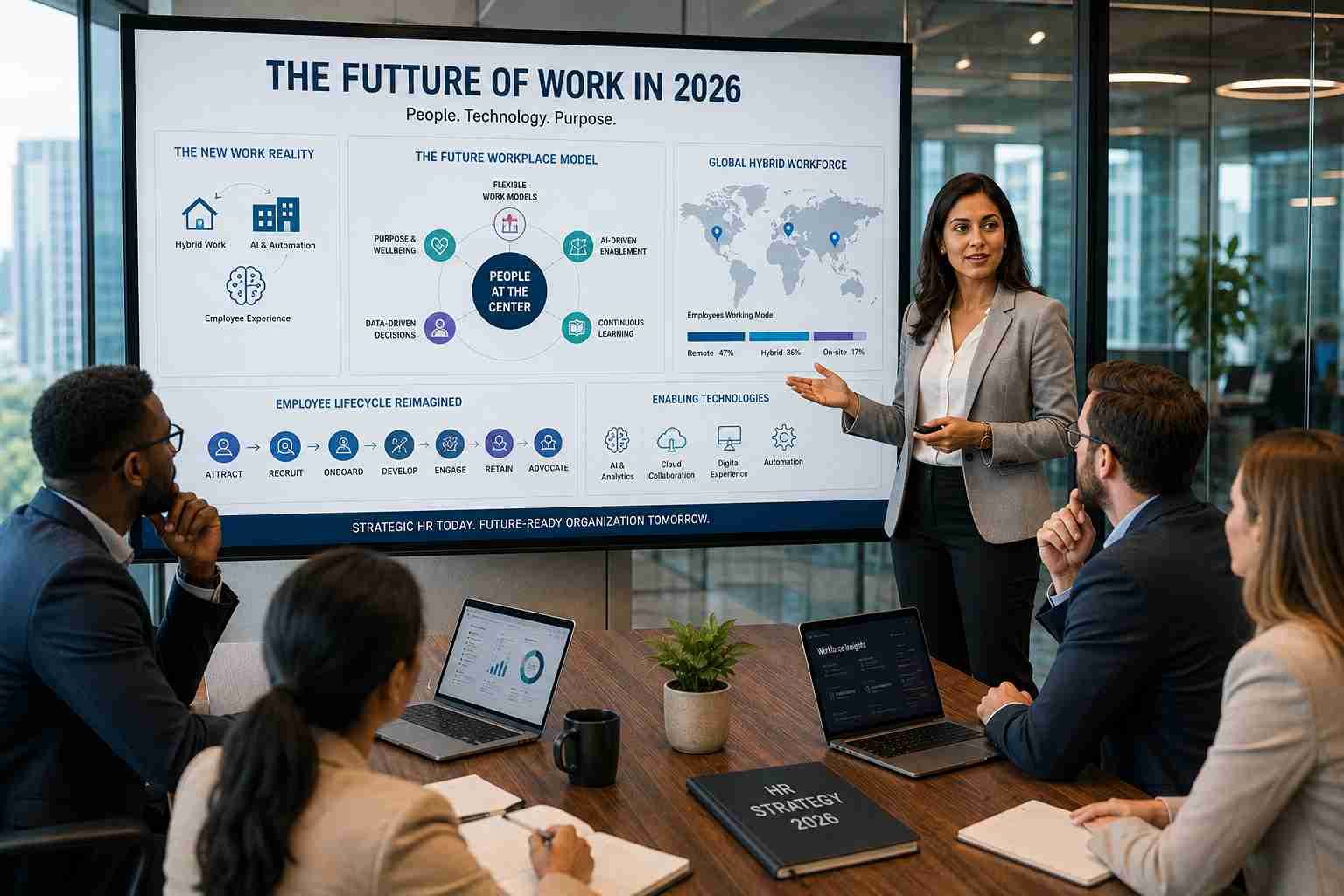
The future of work is no longer a distant concept it's happening now. In 2026, every conversation about business growth eventually leads back to one question: is our HR strategy built for what's coming next? Organizations that once treated HR as an administrative function are discovering that HR transformation is now central to competitiveness. This shift toward the future of HR touches everything from where employees work to how they're hired, trained, and retained. This article breaks down the biggest future workplace trends shaping 2026 and offers a practical roadmap for building an HR strategy that keeps pace.
What Does "Future of Work" Actually Mean in 2026?
The future of work refers to the ongoing shift in how, where, and why people work driven by technology, changing employee expectations, and new organizational models. It's not a single trend but a combination of forces: artificial intelligence in human resources, hybrid work models, data-driven decision-making, and a stronger focus on employee experience.
In practical terms, a modern HR strategy in 2026 typically includes:
Flexible, hybrid-first work policies
AI-powered recruitment and performance tools
Continuous learning and reskilling programs
Data-backed workforce planning
Employee wellbeing as a core business metric
Understanding this definition matters because it reframes HR from a support function into a strategic driver of business outcomes.
The Shift Toward Hybrid Work Models
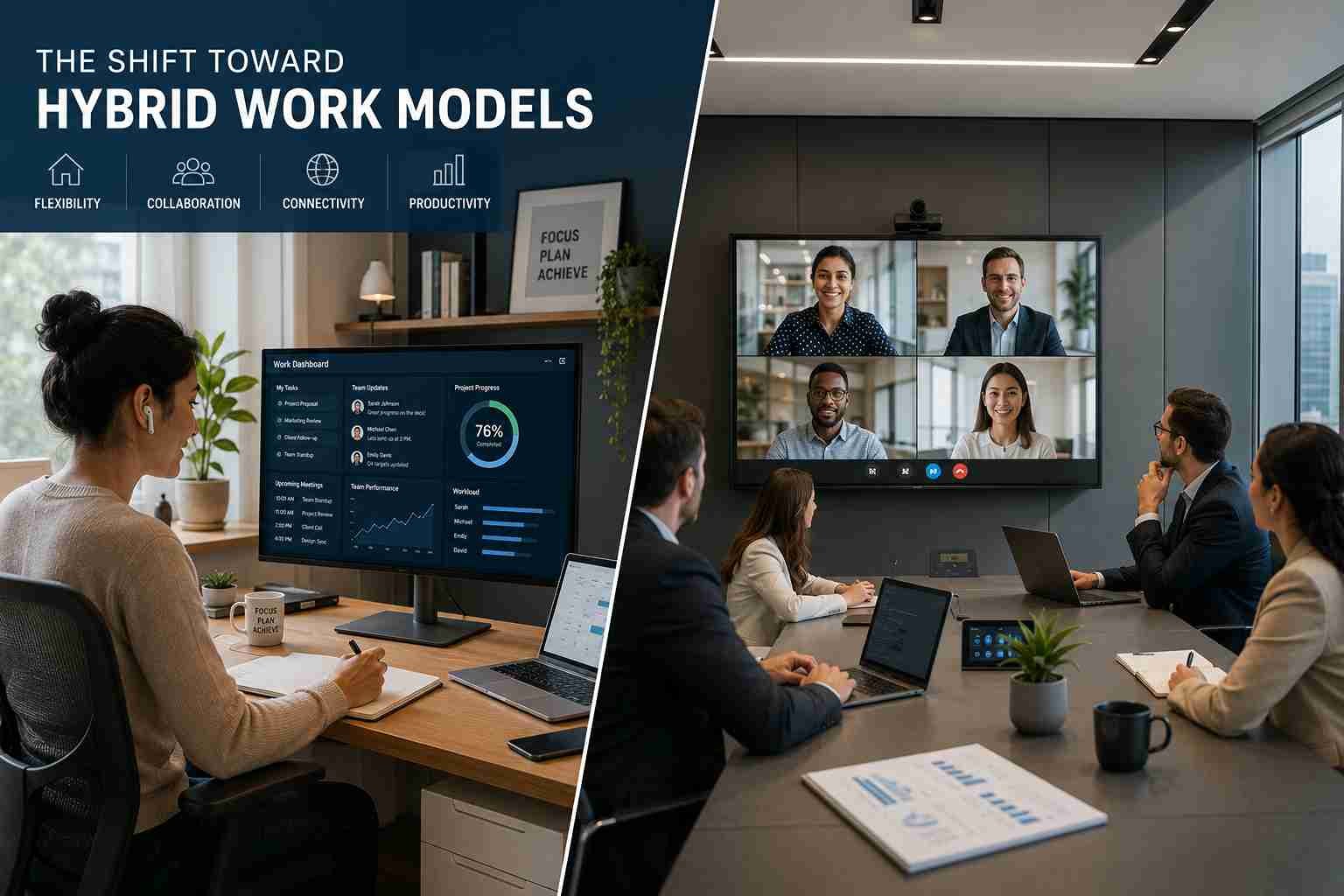 One of the clearest future workplace trends is the normalization of the hybrid work model. Employees now expect autonomy over where and how they work, and organizations that resist this shift often struggle to attract talent.
A well-designed hybrid work model balances two priorities: flexibility for employees and cohesion for the business. HR teams are addressing this by focusing on:
Clear expectations around collaboration time versus independent work
Digital tools that replicate in-office spontaneity
Manager training for leading distributed teams
Policies that prevent "proximity bias" toward in-office staff
The organizations getting this right treat flexibility not as a perk, but as a core pillar of their HR strategy one that directly affects retention and productivity.
AI in Human Resources: From Automation to Strategic Insight
AI in human resources has moved well past chatbots and resume screening. In 2026, HR teams use AI to support decisions across the entire employee lifecycle sourcing candidates, predicting attrition risk, personalizing learning paths, and even flagging burnout indicators before they become resignation letters.
This is where HR digital transformation becomes visible in day-to-day operations. Common applications include:
Recruitment: AI-assisted candidate matching and screening
Performance management: Continuous feedback tools instead of annual reviews
Workforce planning: Predictive models for hiring needs and skill gaps
Employee support: AI-driven HR helpdesks for policy questions
That said, the future of HR isn't about replacing human judgment. The strongest HR strategy pairs automation with empathy, using AI to surface insights while leaving relationship-building and complex decisions to people.
Employee Experience as a Strategic Priority
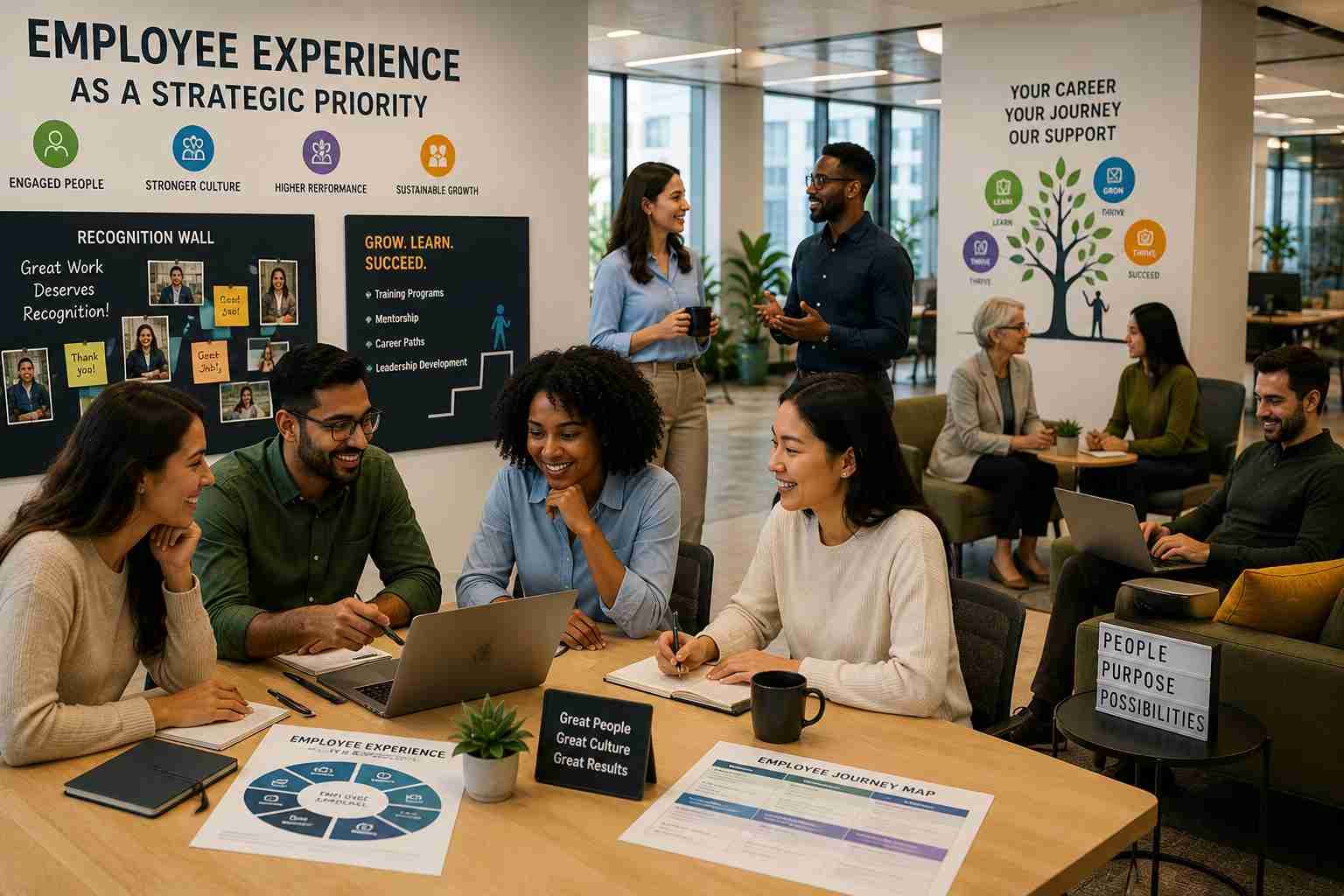 Employee experience has become a boardroom topic, not just an HR initiative. Engaged employees are more productive, more innovative, and far less likely to leave which makes experience a direct lever for business performance.
A future-focused HR strategy typically prioritizes:
Meaningful, purpose-driven work
Transparent career growth pathways
Recognition programs tied to real impact
Wellbeing support that goes beyond a gym stipend
Organizations that invest here don't just reduce turnover they build the kind of organizational culture that becomes a genuine recruiting advantage.
Continuous Learning and Skill Development
Skill half-lives are shrinking. Technologies that were cutting-edge two years ago are now baseline expectations, which is why continuous learning has become non-negotiable in modern HR practices.
Forward-thinking companies are investing in:
Digital and AI-literacy training
Leadership development pipelines
Micro-credentials and professional certifications
Personalized, on-demand learning platforms
This isn't a one-time onboarding activity. In the future workplace, learning is treated as an ongoing process embedded into how work gets done closely tied to talent management and long-term workforce development.
Workforce Analytics: The Backbone of Data-Driven HR
Workforce analytics gives HR teams the ability to move from guesswork to evidence-based decisions. Instead of reacting to turnover after it happens, HR leaders can identify early warning signs and intervene proactively.
Typical use cases include:
Predicting flight risk among high performers
Measuring the ROI of engagement initiatives
Identifying skill gaps before they slow down projects
Benchmarking compensation against market data
A mature HR strategy treats workforce analytics the same way finance treats financial reporting as a continuous, trusted source of truth for decision-making.
Employee Engagement and Retention Strategies That Work
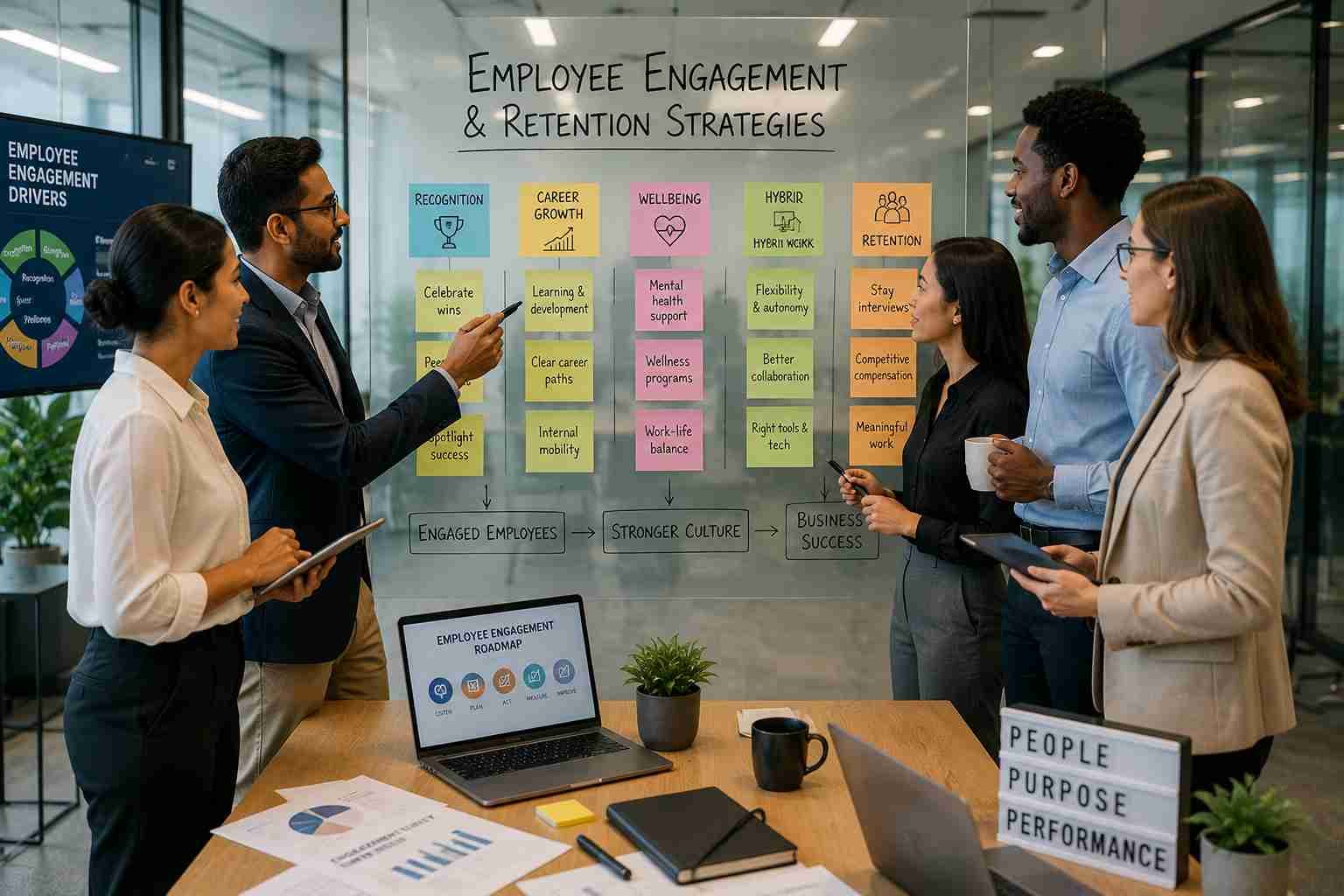 Retention in 2026 requires more than competitive pay. Effective employee engagement and retention strategies combine several elements working together:
Strategy | What It Solves | Typical Owner |
Flexible/hybrid work policy | Work-life balance, talent attraction | HR + Leadership |
Career pathing programs | Stagnation, internal mobility | HR + Managers |
Recognition systems | Disengagement, low morale | Managers + HR |
Wellbeing benefits | Burnout, absenteeism | HR + Benefits Team |
Predictive workforce analytics | Unplanned attrition | HR + Data Teams |
Used together, these strategies create a workplace employees choose to stay in rather than one they tolerate.
Traditional HR vs. Future-Ready HR
Area | Traditional HR | Future-Ready HR (2026) |
Focus | Administrative compliance | Strategic business partner |
Work model | Fixed office schedules | Hybrid work model, flexible |
Decision-making | Intuition-based | Workforce analytics-driven |
Technology use | Basic HRIS systems | AI in human resources, automation |
Learning | One-time onboarding | Continuous learning culture |
Performance reviews | Annual, top-down | Ongoing, two-way feedback |
Challenges HR Leaders Must Navigate
Even the best HR strategy faces real obstacles in a rapidly evolving future of work:
Maintaining Human Connection: As digital tools multiply, teams risk losing informal, relationship-building moments. HR must intentionally design for connection, not assume it happens automatically.
Data Privacy and Security: Wider use of AI in human resources means more employee data is collected and processed. Protecting that data is now a core HR responsibility, not just an IT concern.
Managing Organizational Change New tools and hybrid work models can create uncertainty. Clear, consistent communication from HR reduces resistance and builds trust.
Building Inclusive Workplaces Flexible policies and digital transformation must benefit everyone equally, not just employees who are naturally comfortable with new technology.
How to Build an HR Strategy for the Future of Work (Direct Answer)
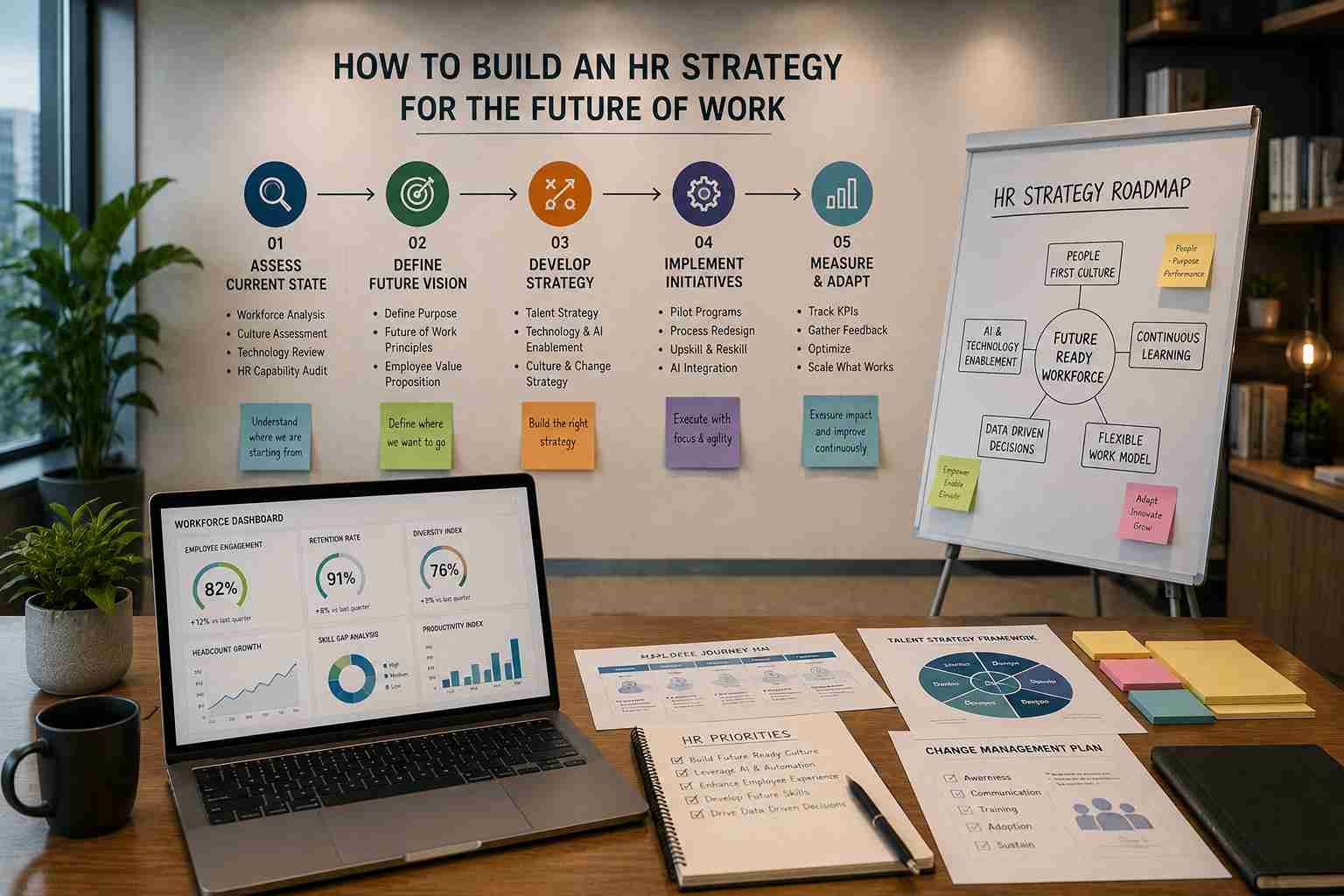 To build an HR strategy ready for 2026 and beyond, organizations should:
Audit current practices against future workplace trends to find gaps
Adopt AI in human resources for recruitment, performance, and workforce planning
Formalize a hybrid work model with clear, fair guidelines
Invest in workforce analytics to make retention and hiring decisions proactively
Prioritize employee experience through recognition, growth, and wellbeing programs
Build continuous learning into everyday workflows, not just annual training
Develop strategic HR leadership capable of connecting people decisions to business outcomes
This sequence gives organizations a practical, repeatable framework rather than a one-off initiative.
FAQ Section
1. What is the future of work in HR? The future of work in HR refers to how technology, hybrid work models, and changing employee expectations are transforming HR from an administrative function into a strategic business driver.
2. How is AI changing human resources? AI in human resources supports recruitment, performance management, workforce planning, and employee support helping HR teams make faster, more informed decisions while freeing time for higher-value human interaction.
3. What is a hybrid work model? A hybrid work model combines remote and in-office work, giving employees flexibility while preserving opportunities for in-person collaboration and culture-building.
4. Why is employee experience important for HR strategy? Employee experience directly affects engagement, productivity, and retention. Companies with strong employee experience programs typically see lower turnover and higher performance.
5. What is workforce analytics used for? Workforce analytics helps HR teams predict turnover risk, measure engagement, identify skill gaps, and make proactive, data-backed workforce decisions.
6. What skills will HR professionals need in the future? Future-ready HR professionals need strategic thinking, data literacy, change management skills, and comfort working alongside AI-driven tools.
7. How can companies improve employee retention in 2026? Companies can improve retention by combining flexible work policies, career development opportunities, recognition programs, and predictive workforce analytics to catch risk early.
Conclusion
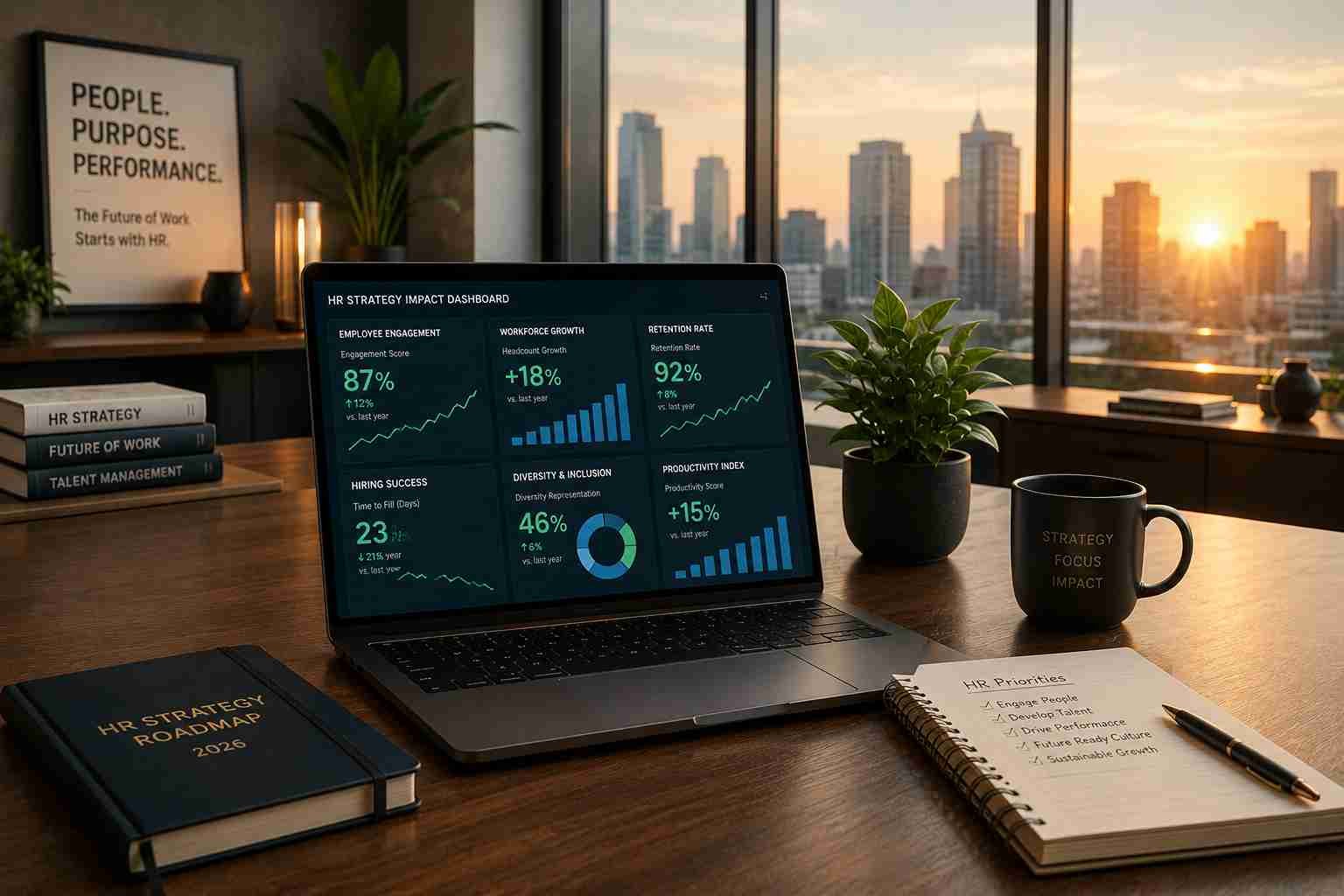 The future of work is redefining what it means to lead people effectively. A modern HR strategy in 2026 blends technology with human-centered leadership combining AI in human resources, hybrid work models, and workforce analytics with genuine investment in employee experience and continuous learning. Organizations that treat HR transformation as an ongoing priority, not a one-time project, will be best positioned to attract talent, retain top performers, and build resilient teams.
If your organization is still relying on outdated HR practices, now is the time to act. Start by auditing your current strategy against the trends outlined above, and take the first step toward building a future-ready workplace.
The Future of Human Resources: Top HR Trends 2026
Employee Retention Strategies in Modern Workplaces 2026
How AI Is Changing HR Processes in 2026
Recruitment in 2026: The Major Shift Toward a Human-Centric Talent Strategy