Mastering LinkedIn Outreach in 2026: Proven Strategies to Build Connections, Generate Leads, and Grow Your Business
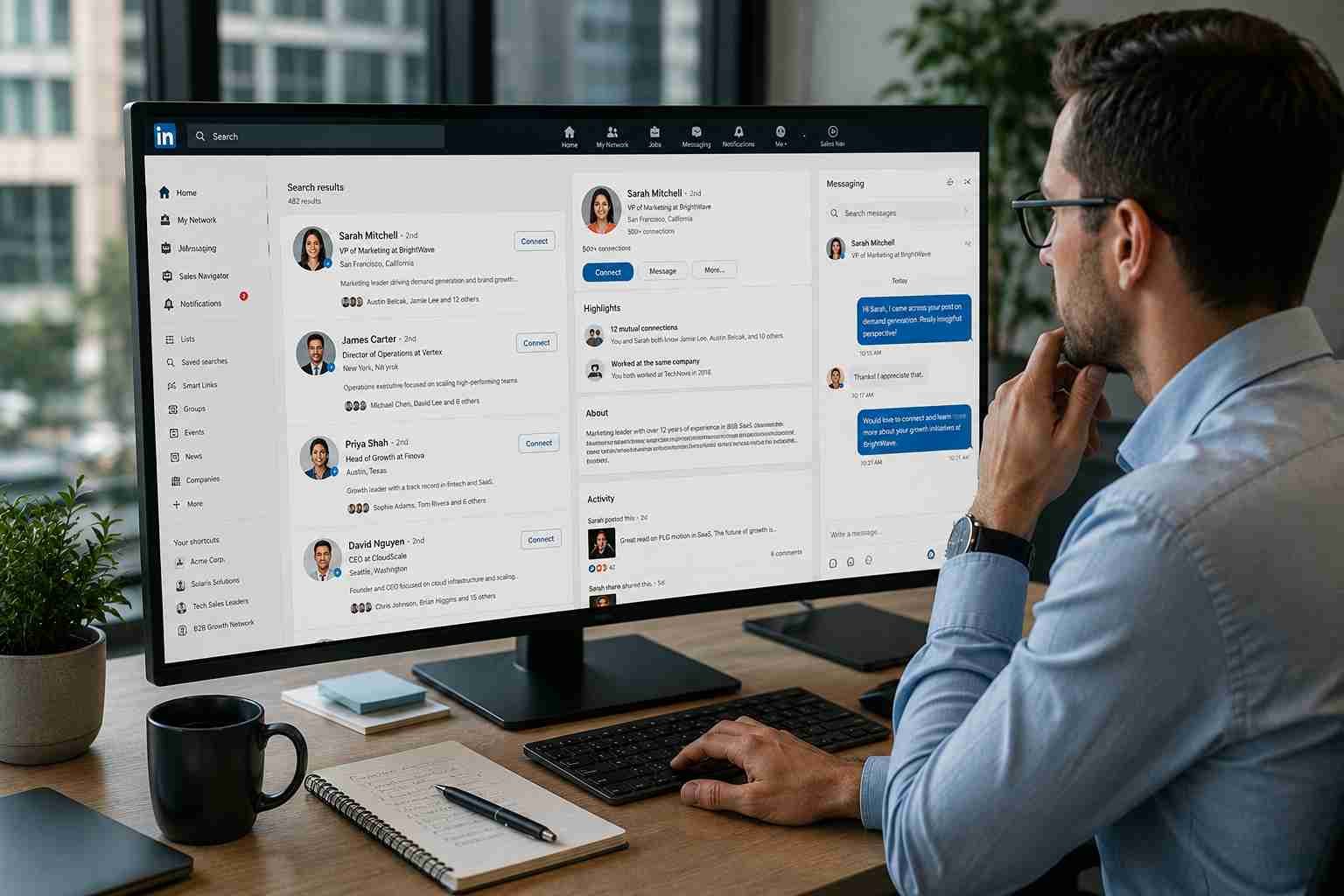
LinkedIn outreach in 2026 isn't about blasting connection requests and hoping something sticks. With more than a billion professionals on the platform, decision-makers are fielding dozens of pitches a week, and most get ignored. A modern LinkedIn outreach strategy works because it's built on research, relevance, and timing, not volume. This guide breaks down exactly how to turn cold connections into qualified leads, candidates, and partners.
Whether you're a founder building a sales pipeline, a recruiter sourcing talent, or a consultant growing your network, the fundamentals below apply. You'll learn how to plan outreach, personalize messages, avoid the mistakes that tank response rates, and use AI without sounding like a bot.
What Is LinkedIn Outreach?
LinkedIn outreach is the practice of proactively contacting prospects, candidates, or partners on LinkedIn through connection requests and direct messages to start a business conversation. Unlike cold email, LinkedIn outreach benefits from visible context mutual connections, shared groups, posts, and work history that lets you personalize before you ever hit send.
Done well, LinkedIn outreach supports three core goals:
LinkedIn B2B lead generation identifying and engaging decision-makers who match your ideal customer profile
LinkedIn recruiting strategy sourcing and approaching passive candidates
Professional networking building relationships that create referrals and partnerships over time
Why LinkedIn Outreach Matters More Than Ever
LinkedIn has moved well past being a digital résumé. It's now where B2B buyers research vendors, where recruiters find talent before a job is ever posted, and where thought leaders build audiences that convert into pipeline. Because engagement happens in the open likes, comments, shares, outreach doesn't have to start cold. You can warm a prospect up by engaging with their content days before you ever send a message.
This is the biggest shift from older outreach playbooks: the connection request is no longer step one. It's often step three or four, after genuine engagement has already put your name in front of the person.
Define Your Outreach Goals Before You Connect
Sending requests without a clear objective is the single most common reason LinkedIn outreach underperforms. Before reaching out, get specific about what you're trying to achieve:
Generating qualified leads for a defined offer
Recruiting candidates for a specific role or skill set
Building strategic partnerships in an adjacent industry
Expanding a niche professional network for referrals
A focused goal shapes everything downstream who you target, what you say, and how you measure success. Outreach aimed at "everyone" converts no one.
Personalization: The Core of Any LinkedIn Outreach Strategy
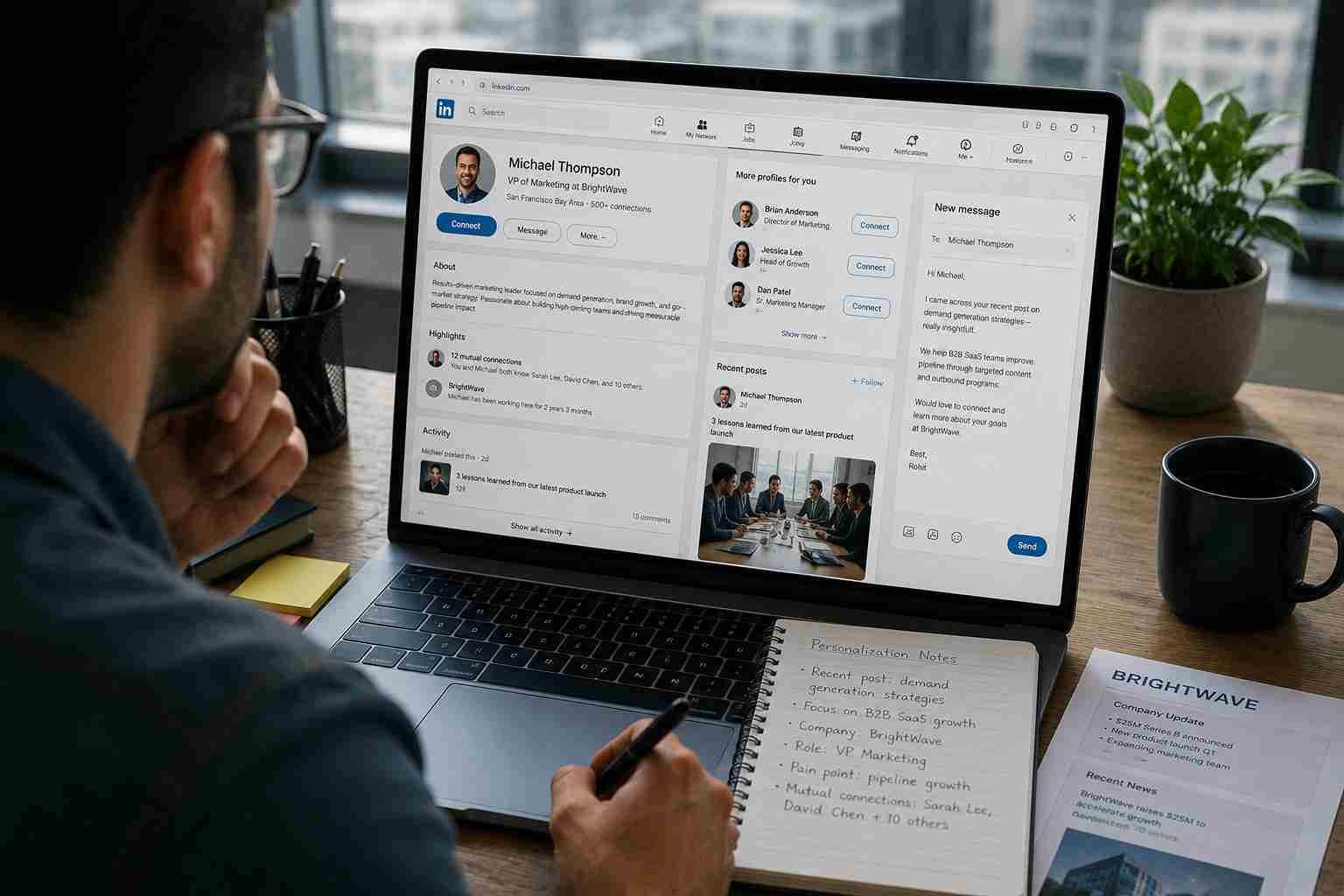 Personalized LinkedIn outreach consistently outperforms generic templates because it signals that you did your homework instead of mass-messaging a list. Before sending a connection request, spend two or three minutes reviewing the person's:
Current role and recent job changes
Company news or funding announcements
Recent posts or comments they've made
Shared groups, alumni networks, or mutual connections
Reference one specific, relevant detail in your opener. "Saw your post on churn reduction, curious how you're tackling onboarding" will always beat "I'd like to add you to my professional network." This is the difference between a message that gets archived and one that gets a reply.
Build the Relationship Before You Pitch
Treating every new connection as an instant sales opportunity is a fast way to get ignored or blocked. Social selling works because it front-loads trust before it asks for anything.
After connecting, spend time on light engagement:
Comment thoughtfully on their posts
Congratulate promotions or company milestones
Share content relevant to their role or industry
Ask a genuine question instead of pitching immediately
This warm-outreach approach feeds your sales pipeline more reliably than cold pitching, because prospects arrive at the sales conversation already familiar with who you are.
Create Value Through Content and Personal Branding
Your outreach message gets someone to look at your profile your content is what convinces them to respond. A LinkedIn profile that consistently shares industry insight, case studies, or practical tips builds personal branding that does outreach work passively, 24/7.
Prospects who visit an active, credible profile are far more likely to accept a request and reply to a follow-up than those landing on a blank profile with no posting history. Content is lead nurturing before the conversation even starts.
Craft a LinkedIn Messaging Strategy That Gets Replies
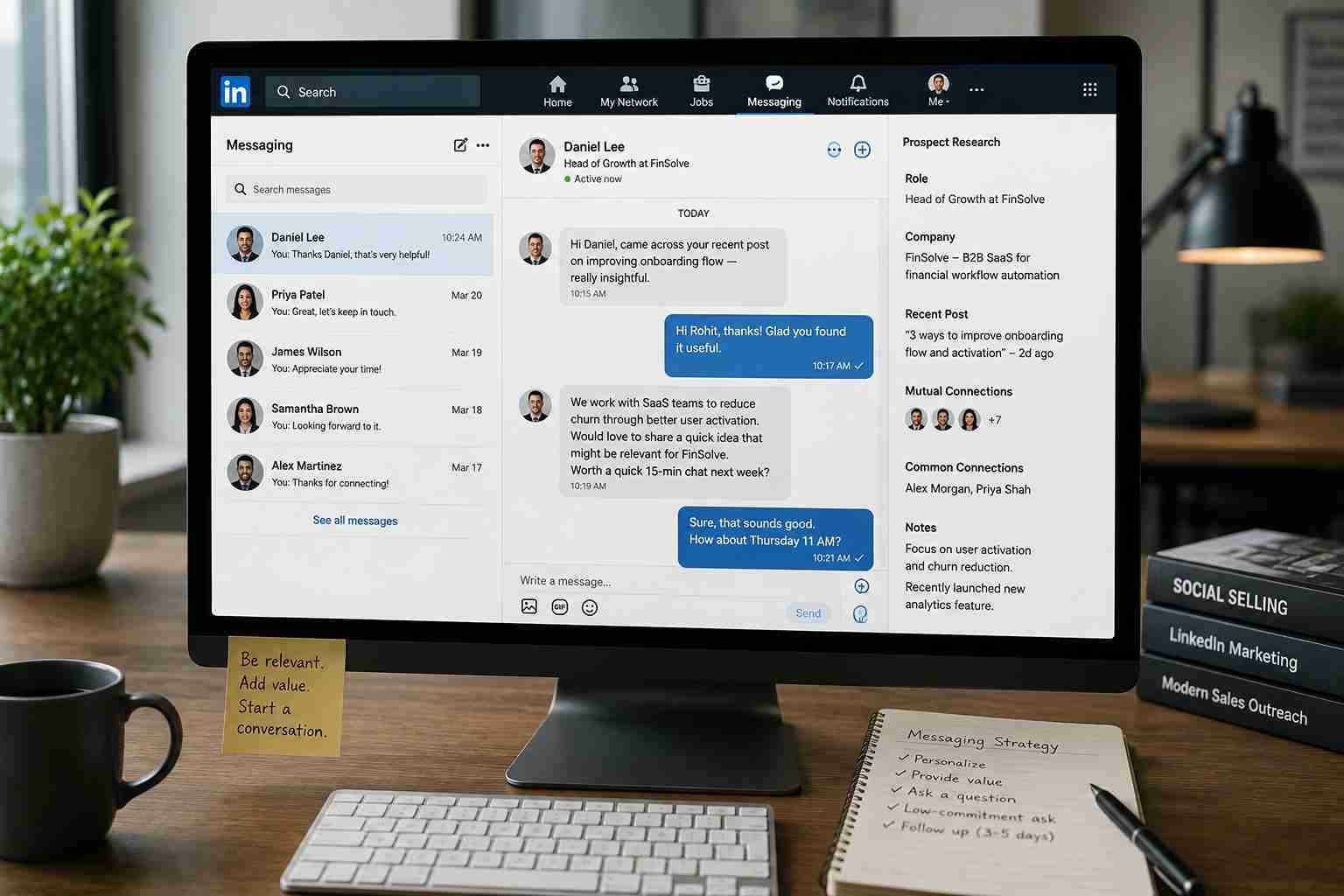
A strong LinkedIn messaging strategy follows a simple structure: relevant hook, brief context, low-pressure ask. Avoid long first messages they feel like mass outreach instead of a personal conversation.
What works:
One specific reason you're reaching out
A brief value statement that builds trust without sounding like a sales pitch.
A low-commitment next step ("Worth a quick chat?" instead of "Book a 30-minute demo")
What to avoid:
Leading with your product or service
Sending the same message to dozens of people unedited
Multiple follow-ups within 24–48 hours
Use AI to Enhance, Not Replace, Human Outreach
AI personalization tools can now research prospects, draft first-pass messages, and flag the best time to follow up, dramatically speeding up outreach automation. But fully automated, context-free messages are easy to spot and tend to lower response rates rather than raise them.
The most effective approach uses AI for research and drafting, then has a human review, adjust tone, and add one detail a template couldn't know. AI should compress the time between research and send it shouldn't remove the human judgment in between.
Follow Up Without Being Pushy
Most missed opportunities aren't rejections they're messages that arrived during a busy week and were never revisited. A good follow-up message:
Adds new value (an article, a stat, a fresh angle) rather than repeating the ask
Stays short two or three sentences
Waits at least four to seven days between messages
Stops after two or three attempts if there's no response
Thoughtful follow-up messages routinely outperform the original outreach message in response rate, because they arrive with lower pressure and more context.
Measure and Improve Your LinkedIn Outreach Strategy
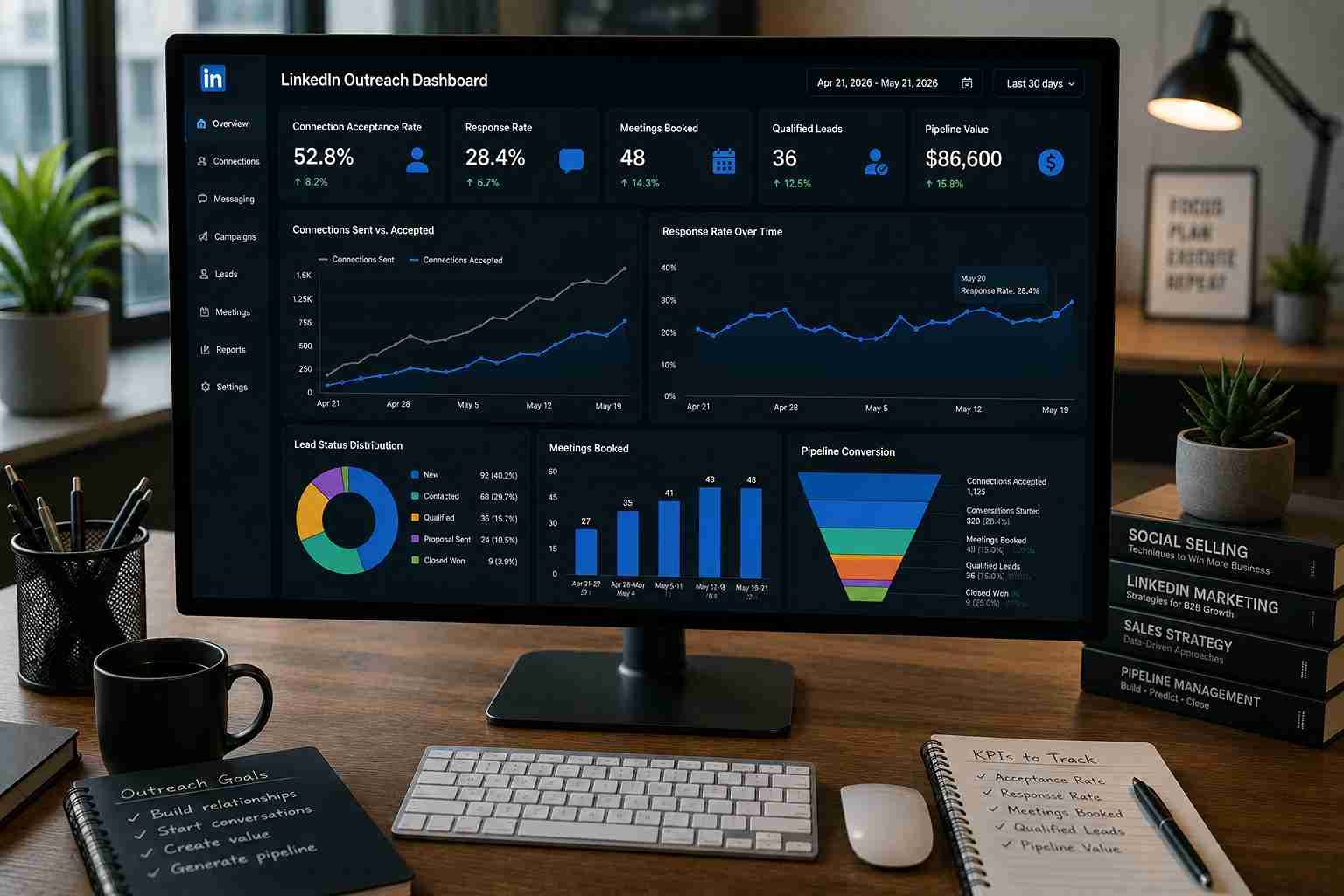 Treat outreach as a system you refine, not a one-time campaign. Track:
Metric | What It Tells You |
Connection acceptance rate | Whether your targeting and request message resonate |
Message response rate | Whether your messaging strategy is landing |
Meeting/call conversion rate | Whether your offer and pitch are compelling |
Leads-to-pipeline rate | Whether you're targeting the right audience |
Reviewing these monthly lets you spot which messaging angles, industries, or job titles convert best and double down there.
Common LinkedIn Outreach Mistakes to Avoid
Sending identical templates to hundreds of profiles
Pitching in the very first message
Skipping profile optimization before starting outreach
Sending three follow-ups in one week
Ignoring engagement (likes, comments) entirely
Treating every connection as a lead instead of a relationship
Comparison: Cold Outreach vs. Warm LinkedIn Outreach
Factor | Cold Outreach | Warm LinkedIn Outreach |
Starting point | Direct connection request + pitch | Engagement (likes/comments) before connecting |
Typical response rate | Lower | Meaningfully higher |
Time investment upfront | Low | Moderate |
Trust at first message | Minimal | Established |
Best for | High-volume top-of-funnel testing | High-value target accounts and candidates |
The Future of LinkedIn Outreach
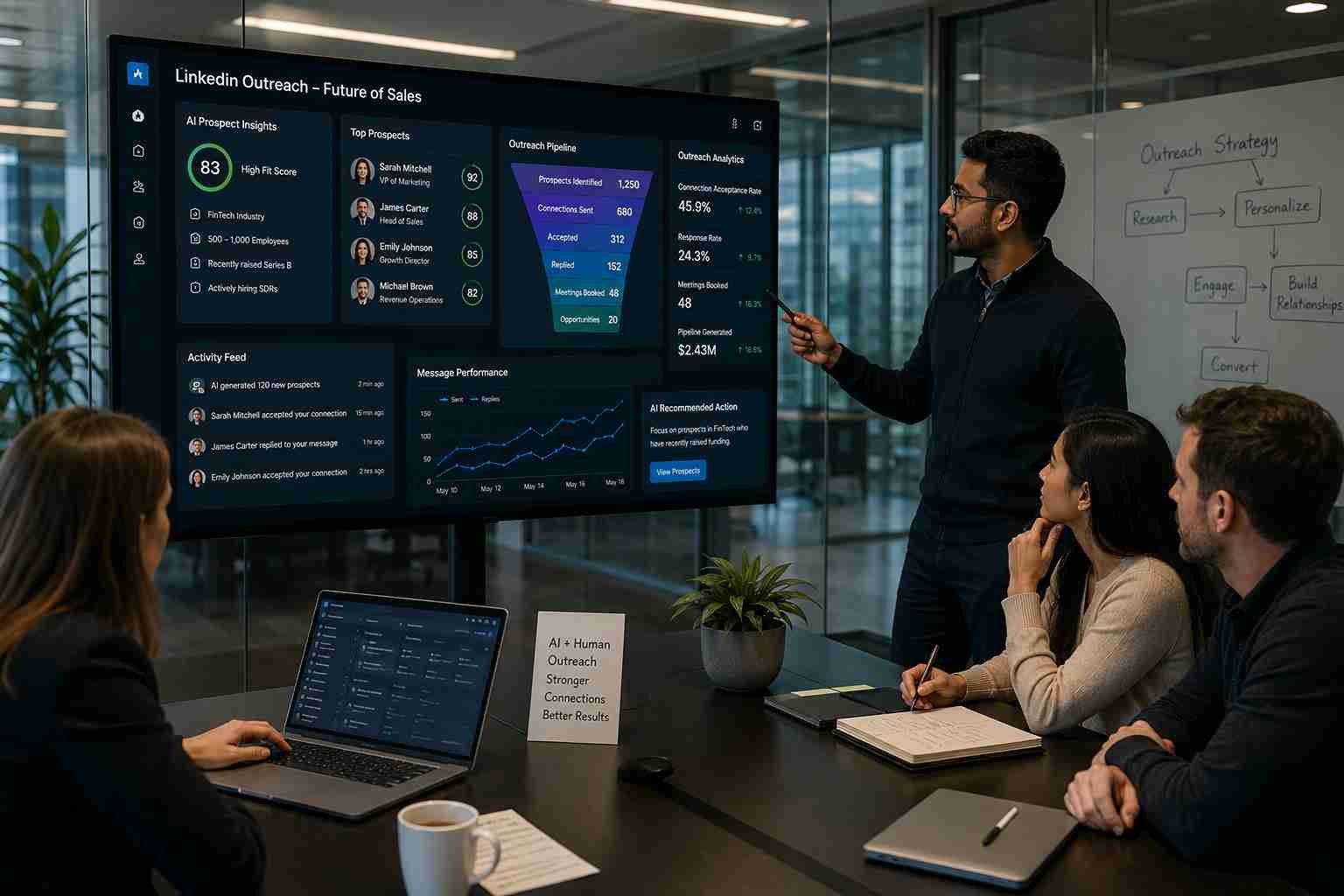 Expect deeper CRM integration, smarter AI-assisted prospect research, and predictive analytics that flag the best time to reach a given contact. But the underlying principle won't change: people respond to people, not templates. The professionals who combine AI efficiency with authentic, well-researched messaging will keep winning as the platform evolves.
FAQ Section
What is LinkedIn outreach?
LinkedIn outreach is the process of proactively contacting prospects, candidates, or partners on LinkedIn through connection requests and direct messages to start a business conversation.
How does LinkedIn outreach work? I
t typically starts with identifying the right audience, researching each prospect, sending a personalized connection request, and following up with value-driven messages until a conversation or meeting is set.
How do you generate leads on LinkedIn?
Effective LinkedIn B2B lead generation combines targeted prospecting, personalized messaging, content that builds credibility, and consistent follow-up rather than one-off pitches.
What is the best LinkedIn outreach strategy?
The strongest approach blends warm engagement (likes, comments) before connecting, a personalized opening message, and a low-pressure ask — supported by AI research tools and consistent follow-up.
How do I improve LinkedIn response rates?
Personalize every message with a specific detail from the prospect's profile or posts, keep the ask small, and follow up with new value instead of repeating your original message.
How many LinkedIn connection requests should I send daily?
Most professionals stay in the range of 15–25 personalized requests per day to maintain quality and avoid LinkedIn's automated activity limits.
What should I say in a LinkedIn connection request?
Reference something specific a recent post, shared connection, or company update and keep it under 300 characters. Avoid pitching in the request itself.
Is LinkedIn outreach effective for B2B?
Yes. LinkedIn remains one of the highest-converting channels for B2B lead generation because it lets professionals engage decision-makers directly, with visible context that supports personalization.
Can AI improve LinkedIn outreach?
AI can speed up prospect research, drafting, and follow-up scheduling, but messages still need human review to stay authentic and avoid sounding automated.
How do you personalize LinkedIn messages?
Reference the person's role, recent activity, company news, or a mutual connection, and tie your outreach directly to something relevant to them not a generic template.
What are common LinkedIn outreach mistakes?
Pitching immediately, using identical templates at scale, over-following-up, and neglecting profile optimization or content are the most frequent mistakes that hurt response rates.
How often should I follow up on LinkedIn?
Space follow-ups four to seven days apart, and stop after two or three attempts if there's no response.
What is social selling on LinkedIn?
Social selling means building trust through engagement and content before starting a sales conversation instead of sending a cold pitch.
How do recruiters use LinkedIn outreach?
Recruiters use a LinkedIn recruiting strategy to identify passive candidates, personalize outreach around a candidate's experience and career goals, and nurture relationships even for roles that aren't open yet.
What tools help with LinkedIn prospecting?
Common tools include LinkedIn Sales Navigator for targeted search, CRM integrations for tracking pipeline, and AI-assisted platforms for research and message drafting.
Conclusion
 LinkedIn outreach in 2026 rewards professionals who treat it as relationship-building, not a numbers game. The strategy is straightforward: define your goal, research before you reach out, personalize every message, add value before you pitch, and follow up with patience instead of pressure. Combine that with AI tools for efficiency not replacement and you'll build a LinkedIn outreach strategy that consistently turns connections into leads, candidates, and partnerships.
Start small: pick ten prospects this week, research each one, and send a genuinely personalized message. That single habit, repeated consistently, is what separates outreach that gets ignored from outreach that grows your business.
HR Skills of the Future: What Every Professional Needs in 2026
The Future of Work: How HR Strategies Are Changing in 2026
How AI Is Transforming Modern Sales Processes in 2026
Recruitment in 2026: The Major Shift Toward a Human-Centric Talent Strategy