How to Rank a New Website on Google Page 1: The Complete 2026 Playbook
If you've just launched a website, you already know the hard truth: nobody can buy from you, read your content, or trust your brand if they can't find you. Learning how to rank a new website on Google is the single most valuable skill you can develop as a site owner, because organic search still drives the majority of online discovery. The good news is that ranking a brand-new domain isn't luck it's a sequence of decisions around keyword research, on-page SEO, technical SEO, and backlink building that, done in the right order, can realistically get you onto page 1 within 6-9 months.
This guide breaks down exactly how to rank a new website on Google, step by step, using the same framework professional SEO agencies use for new domain launches.
Why New Websites Struggle to Rank
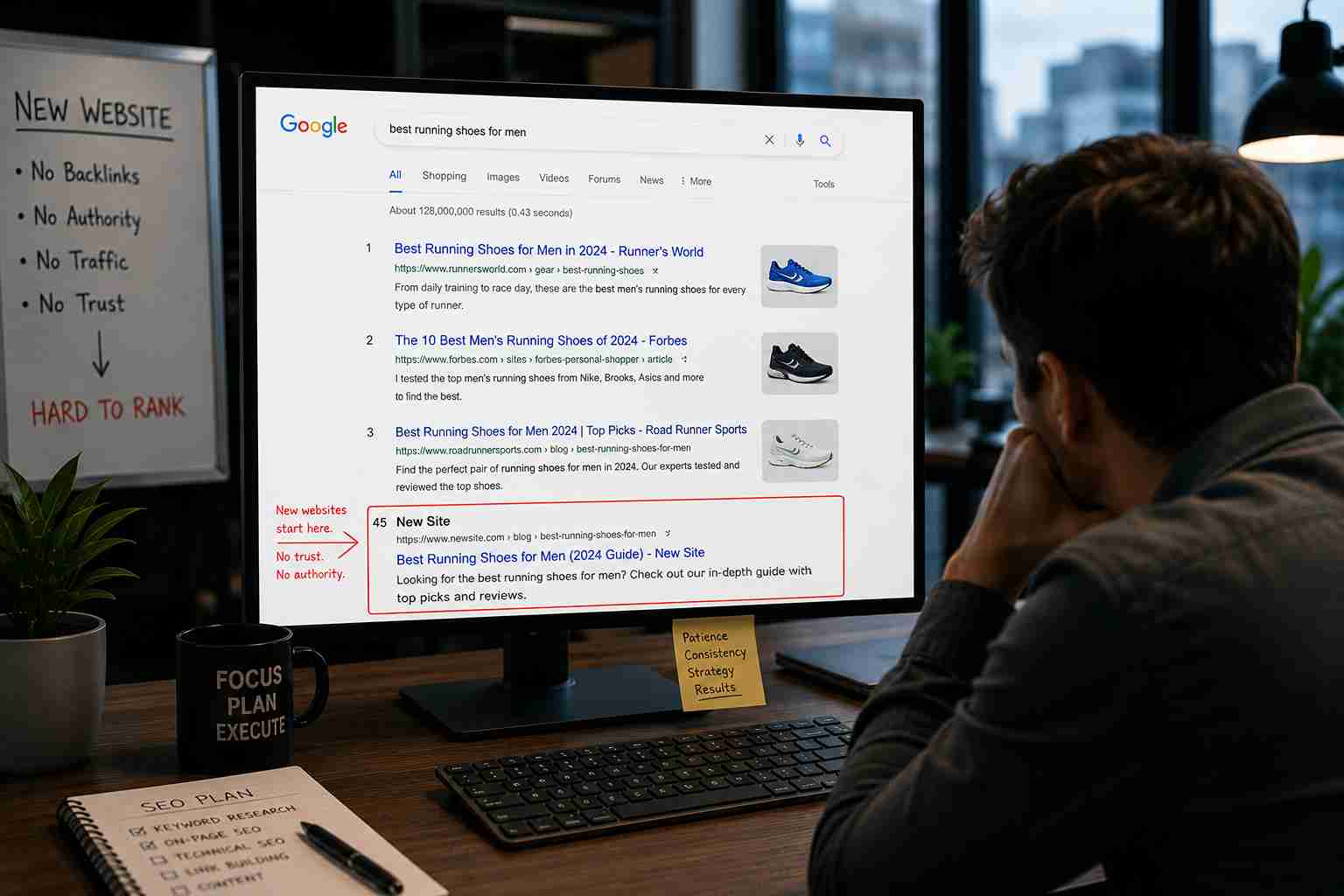 Roughly two-thirds of all online experiences begin with a search engine, and the first organic search result captures a disproportionate share of clicks compared to anything below it. A new site starts with zero domain authority, no backlink history, and no trust signals, so Google has no evidence yet that your content deserves to outrank established competitors.
This is why so many beginners ask how to rank a new website on Google and get discouraged within a few weeks: rankings simply don't happen overnight. Google's crawlers need time to discover, index, and evaluate your pages against hundreds of ranking signals before it trusts you enough to show your content on page 1.
Understanding Google Ranking Factors
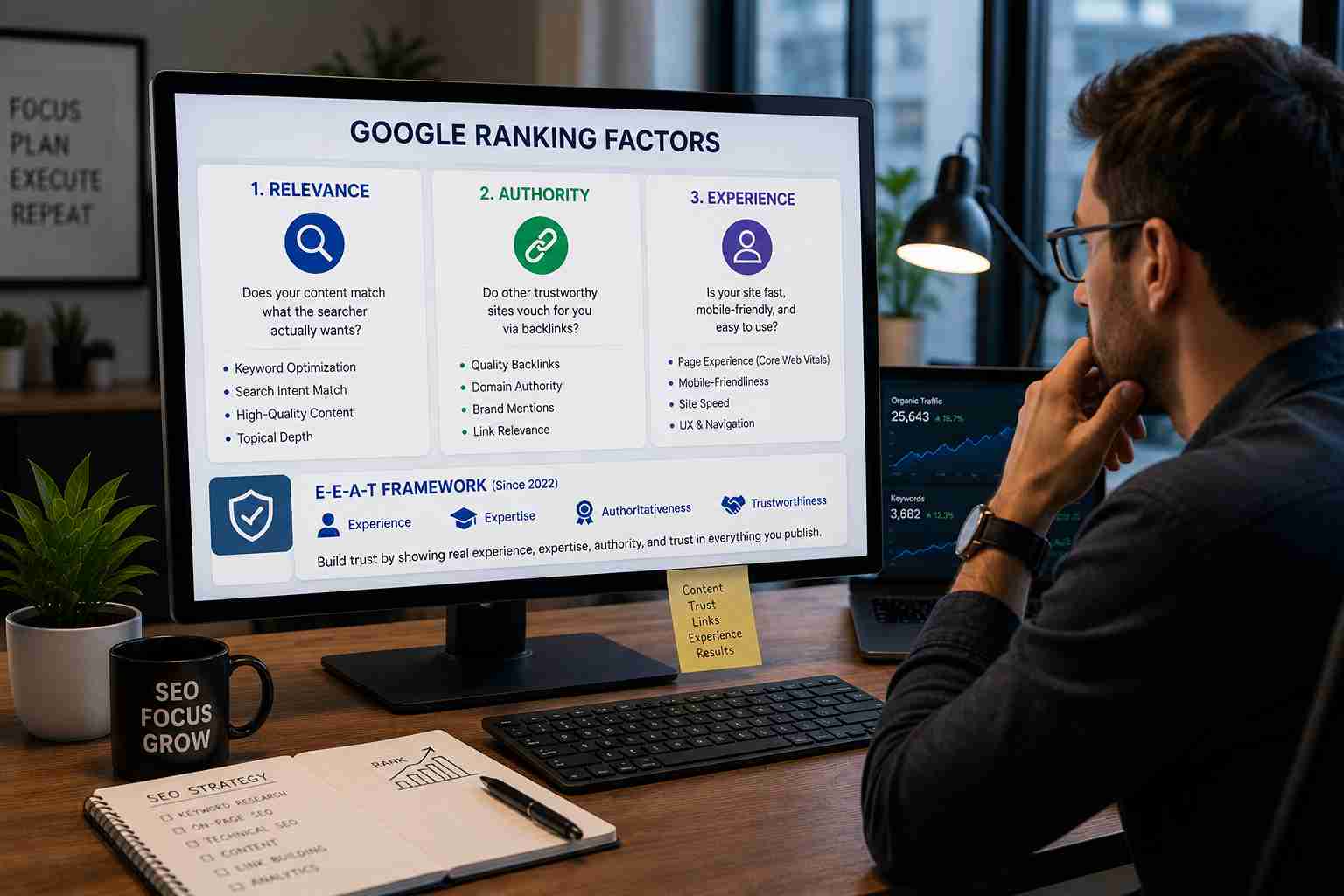 Before tackling tactics, it helps to understand what Google actually evaluates. Google ranking factors generally fall into three buckets:
Pillar | What It Means |
Relevance | Does your content match what the searcher actually wants? |
Authority | Do other trustworthy sites vouch for you via backlinks? |
Experience | Is your site fast, mobile-friendly, and easy to use? |
Since 2022, Google has layered in E-E-A-T (Experience, Expertise, Authoritativeness, Trustworthiness) as a guiding framework, particularly for topics that affect a reader's health, finances, or safety. New sites should demonstrate E-E-A-T early by publishing author bios, citing credible sources, and keeping contact details transparent.
Step 1: Keyword Research Find Terms You Can Actually Win
 Keyword research is where most new-site SEO strategies succeed or fail. Targeting keywords that are too competitive guarantees you'll stay invisible for years.
Start by identifying search intent informational, commercial, transactional, or navigational because matching intent matters more than matching exact phrasing. From there:
Use free sources like Google Autocomplete and "People Also Ask" to surface real search queries
Run seed terms through tools like Google Keyword Planner, Ahrefs, or Semrush for search volume and keyword difficulty data
Prioritize long-tail keywords (3-5+ word phrases) over short-tail keywords, since long-tail terms have lower competition and convert better for new sites
Map one keyword per page to avoid keyword cannibalization, where two pages on your own site compete against each other
A new site targeting low-CPC, low-difficulty long-tail terms can often see traffic within 60-90 days, far faster than chasing broad, high-volume head terms.
Step 2: On-Page SEO Optimize What You Control
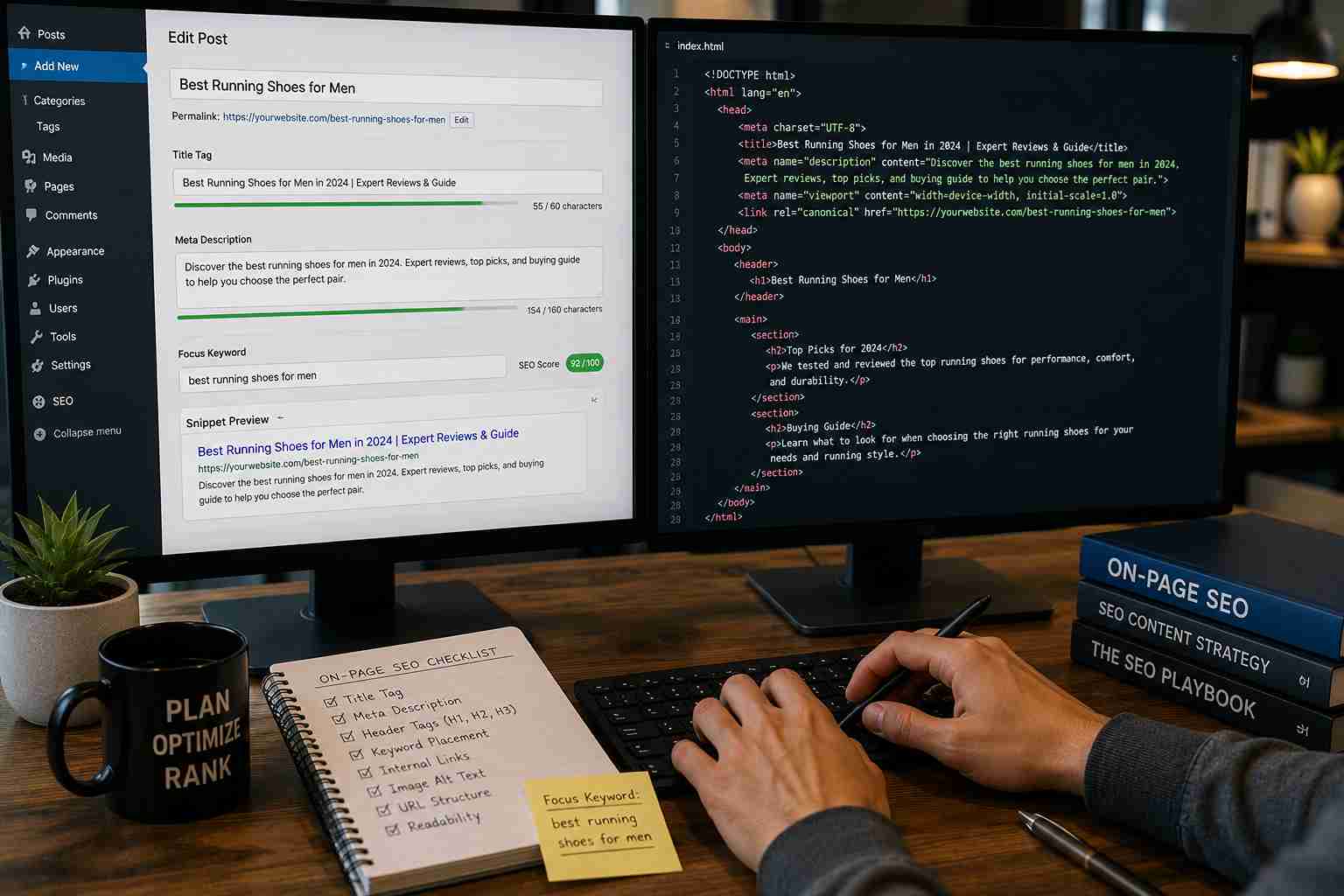 On-page SEO is the fastest lever you have, because it requires no outside cooperation. Every page should include:
A title tag under 60 characters with your primary keyword near the front
A unique meta description (150-160 characters) with a clear call-to-action
One H1 containing your primary keyword, with logical H2/H3 subheadings
A clean URL structure using hyphens, not underscores
Alt text on every image, plus compressed file sizes
3-5 internal links to related pages and 2-3 external links to authoritative sources
Natural keyword density (around 1-2%) and a Flesch readability score of 60-70 for easy reading
These elements help Google understand your content's topic and relevance and they're also exactly what AI tools scan when summarizing or citing a page.
Step 3: Technical SEO Make Sure Google Can Actually Crawl You
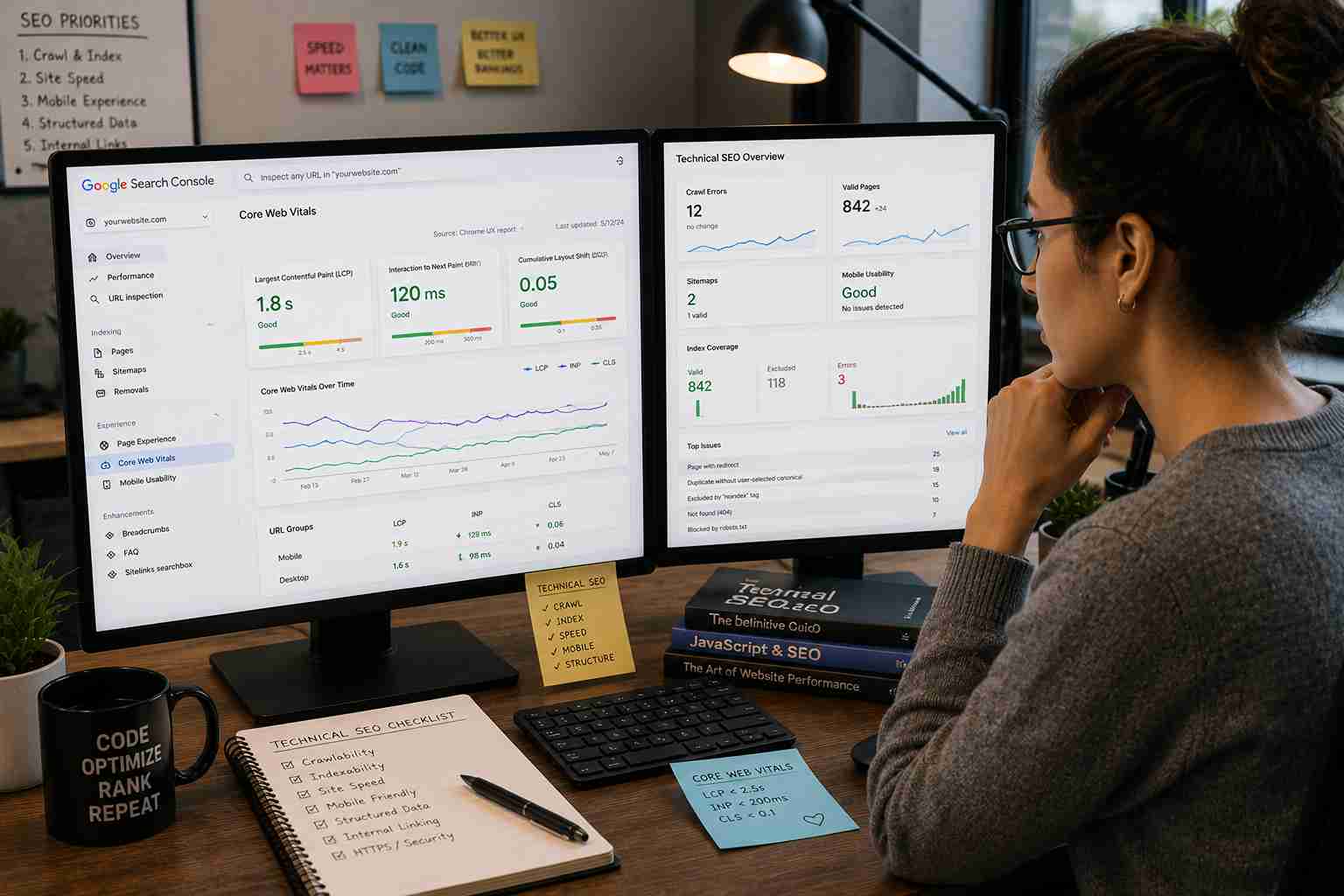 Even perfect content won't rank if Google can't access it. Technical SEO covers the infrastructure layer:
Submit an XML sitemap to Google Search Console
Configure robots.txt correctly so you're not accidentally blocking important pages
Enable HTTPS/SSL it's been a confirmed ranking signal since 2014
Use 301 redirects (never 302) when moving or merging pages
Add structured data (schema markup) so Google can generate rich results
Core Web Vitals: The Page Experience Layer
Core Web Vitals are Google's official metrics for measuring real-world user experience:
Metric | Measures | Target |
LCP (Largest Contentful Paint) | Loading speed | Under 2.5 seconds |
INP (Interaction to Next Paint) | Responsiveness | Under 200 milliseconds |
CLS (Cumulative Layout Shift) | Visual stability | Below 0.1 |
Combined with mobile-first indexing, where Google evaluates your mobile site as the primary version, these metrics make page speed and mobile usability non-negotiable for any new website hoping to rank.
Step 4: Off-Page SEO and Backlink Building
Off-page SEO, primarily backlinks, signals authority to Google. Each quality link passes link equity (sometimes still called PageRank) to your domain, gradually raising your domain authority.
Effective, white-hat tactics for new sites include:
Guest posting on relevant, established blogs
Broken link building finding dead links and offering your content as a replacement
HARO (Help a Reporter Out) and similar platforms to earn media backlinks
Digital PR through original research, free tools, or data studies worth citing
Local NAP citations (Name, Address, Phone) on relevant directories
Avoid link farms and PBNs (private blog networks) Google penalizes manipulative link schemes, and the short-term gains rarely outweigh the long-term risk.
Step 5: Local SEO (If You Serve a Specific Area)
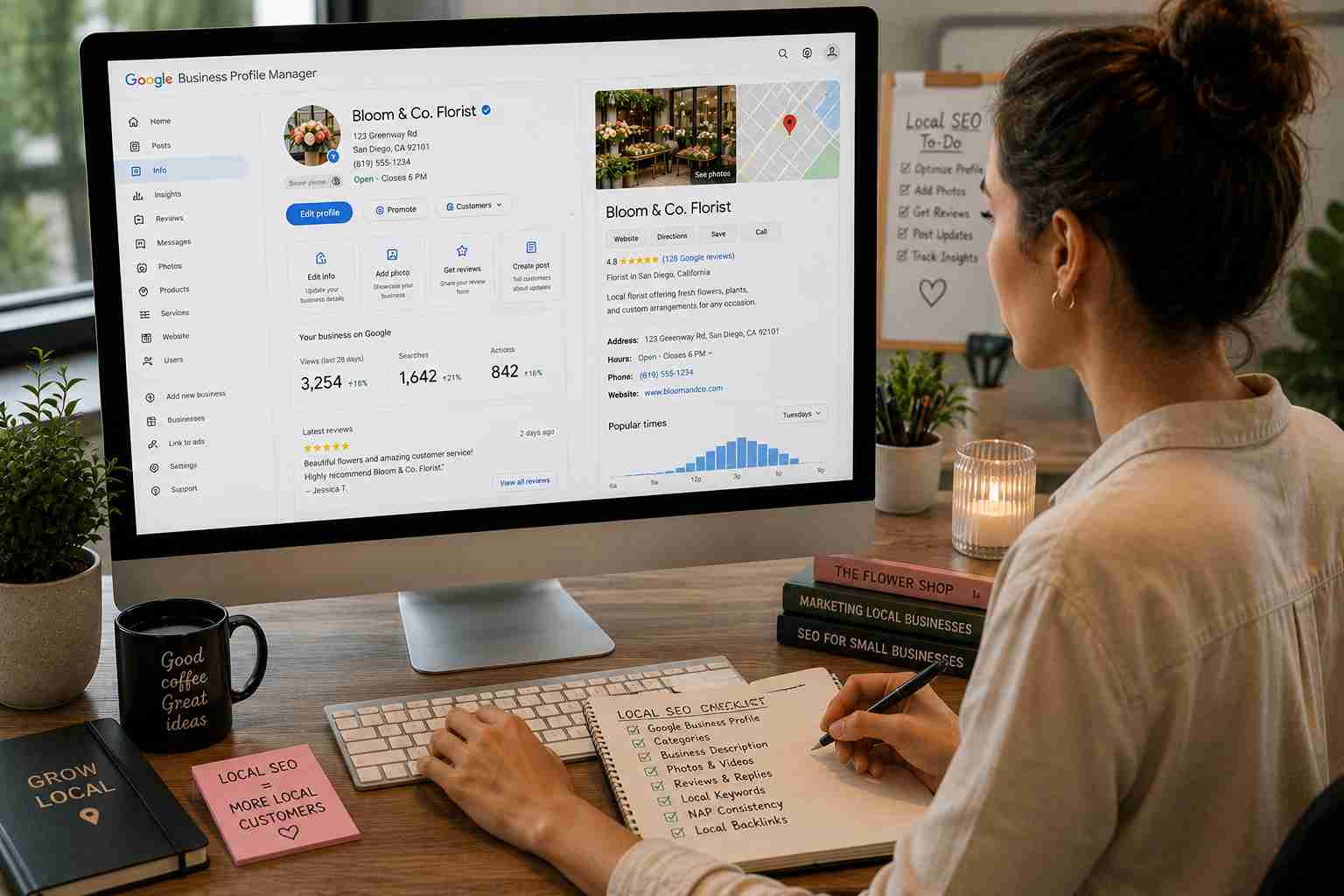 If your business serves a city or region, local SEO can get you into Google's Map Pack, which captures a large share of local search clicks. Core actions include:
Claiming and fully optimizing your Google Business Profile
Embedding location pages with city names in titles and headings
Building local citations on relevant directories
Adding LocalBusiness schema markup to your homepage
Step 6: Content SEO and Topic Clusters
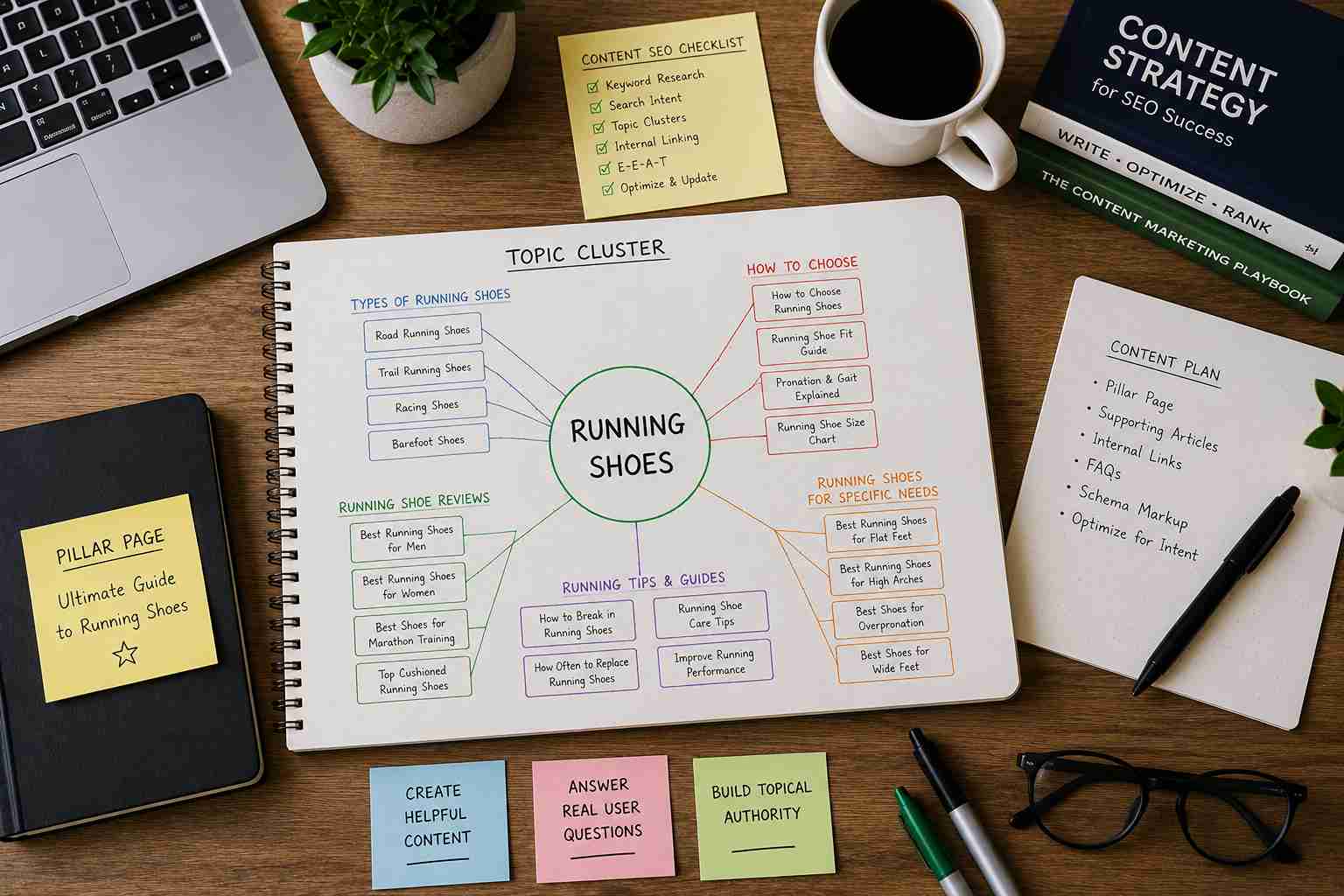 Content SEO (or content marketing) is the long-term engine behind sustainable rankings. Build a pillar page, a comprehensive guide on your core topic and surround it with cluster content: shorter articles that link back to the pillar and cover related subtopics in depth.
How to Rank a New Website on Google: A Direct Answer
Two well-researched articles per month, published consistently for a year, will consistently outperform a content dump followed by silence. Consistency, not volume, is what compounds.
Featured snippets are another high-value content target: answer common questions in 40-50 words directly beneath a heading, and use numbered or bulleted lists for "how to" and "what is" queries. FAQ schema further increases your odds of appearing in rich results.
To rank a new website on Google, you need to: conduct keyword research focused on low-competition long-tail terms, optimize on-page elements like title tags and headings, fix technical issues affecting crawlability and Core Web Vitals, earn backlinks through legitimate outreach, and publish consistent, original content that satisfies search intent. Most new sites begin seeing meaningful organic search results within 3-6 months and reach page 1 for competitive terms within 7-12 months, assuming consistent execution across all five pillars.
The 90-Day SEO Plan for New Websites
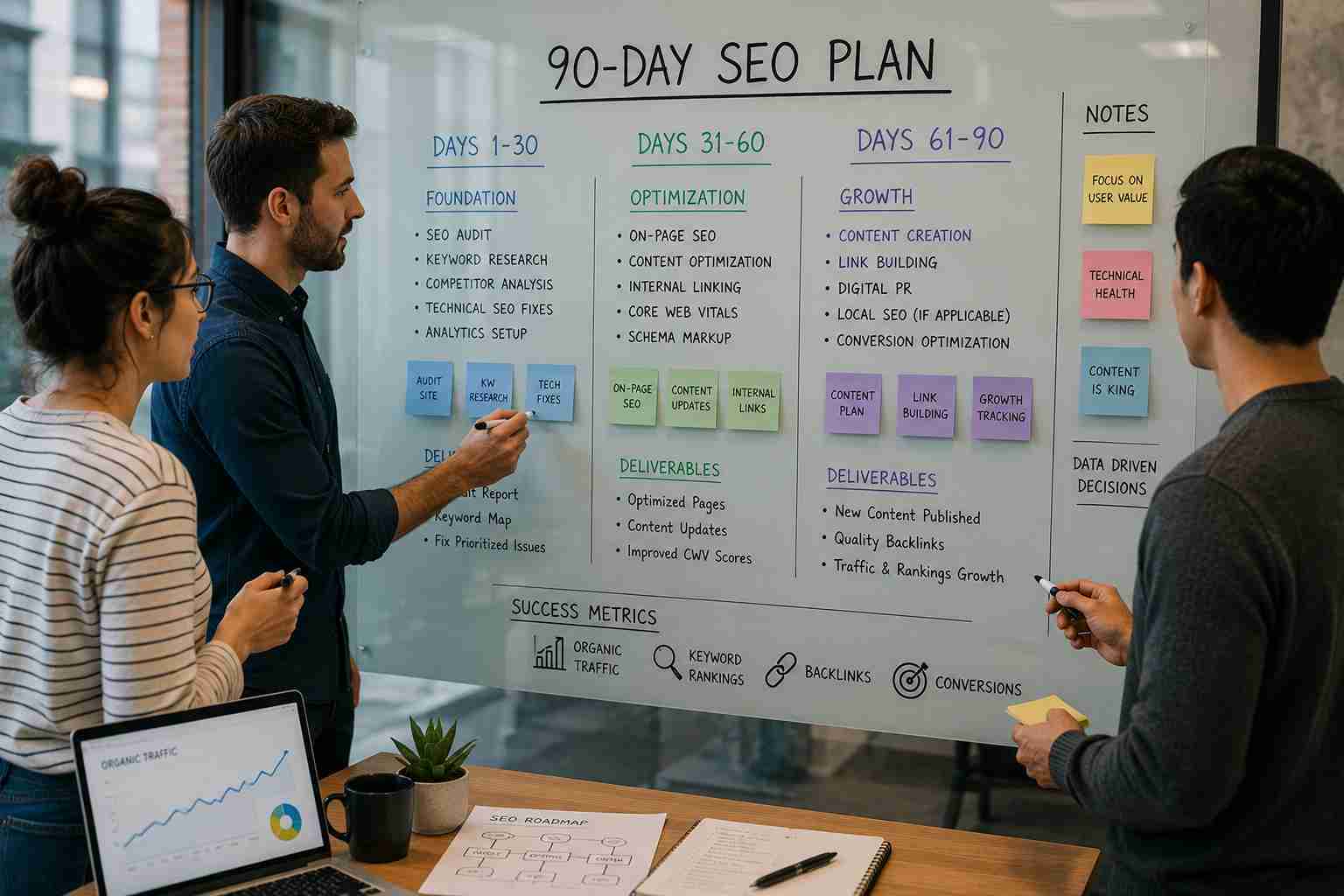 Days 1-30 (Foundation): Set up HTTPS, Google Search Console, and Google Analytics 4. Complete keyword research and optimize existing pages.
Days 31-60 (Content & On-Page): Publish 4-6 articles targeting long-tail keywords, build your first pillar page, and implement schema markup.
Days 61-90 (Authority): Begin guest posting outreach, submit to relevant directories, and review Search Console data to refine underperforming pages.
Essential SEO Tools to Track Progress

Tool | Use Case |
Google Search Console | Monitor impressions, clicks, and indexing |
Google Analytics 4 | Track organic sessions and conversions |
Screaming Frog | Run technical site audits |
PageSpeed Insights | Diagnose Core Web Vitals issues |
Ahrefs / Semrush | Keyword research and backlink analysis |
Track organic sessions, impressions, click-through rate, bounce rate, and conversion rate monthly rankings alone don't matter if visitors don't take action.
FAQ Section
1. How long does it take to rank a new website on Google? Most new websites begin seeing long-tail keyword traffic within 3-4 months, with page 1 rankings for competitive terms typically arriving between months 7 and 12, assuming consistent SEO effort.
2. What's the fastest way to rank a new website on Google? Targeting low-difficulty, long-tail keywords with strong on-page SEO is the fastest realistic path, since these terms face less competition than short-tail or head terms.
3. Do I need backlinks to rank a brand-new site? Yes. Backlinks remain one of the strongest off-page SEO signals, and new sites typically need at least 10-20 quality backlinks to begin building meaningful domain authority.
4. Is technical SEO really necessary for a small website? Yes if Google can't crawl and index your pages efficiently, even excellent content won't rank, regardless of site size.
5. How often should I publish content to improve rankings? Two well-researched articles per month, published consistently over 12 months, generally outperforms sporadic bulk publishing.
6. What are Core Web Vitals and why do they matter? Core Web Vitals (LCP, INP, CLS) are Google's official page experience metrics measuring load speed, responsiveness, and visual stability all confirmed ranking factors.
7. Can I rank without local SEO if I'm not a local business? Yes local SEO only applies if you serve a specific geographic area. E-commerce and purely online businesses should focus on keyword research, content SEO, and backlink building instead.
Conclusion
 Learning how to rank a new website on Google isn't about chasing a single trick it's about systematically building relevance, authority, and experience through keyword research, on-page SEO, technical SEO, backlink building, and consistent content publishing. Follow the 90-day plan outlined above, track your progress with the right SEO tools, and stay consistent for 6-12 months. The sites that win page 1 aren't always the biggest the are the ones that execute the fundamentals correctly and keep showing up. Start your first 30 days today, and revisit this guide as a checklist at every stage of your SEO journey.
Common SEO Mistakes That Hurt Rankings | 20 SEO Errors to Avoid in 2026
Future of Digital Marketing: Trends & Predictions
Best Social Media Marketing Strategies for Small Businesses in 2026
Google Ads vs Facebook Ads: Which Is Better for Your Business in 2026?