Is Google AI Hurting Your Website Traffic? Here's How Visual Content Can Help Your Business Stand Out in 2026
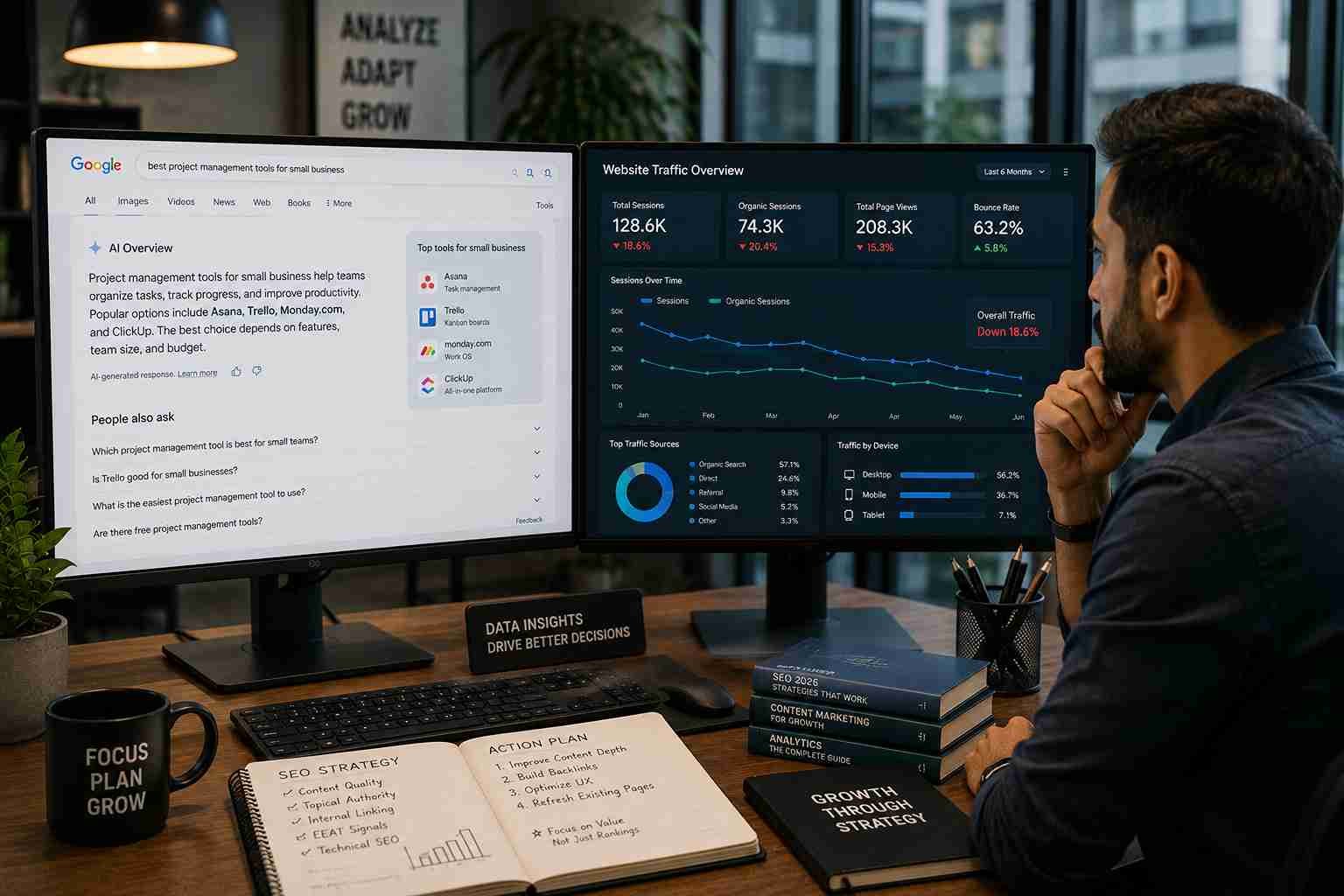 If your website traffic has quietly declined over the past few months, you're not imagining it. Across industries, business owners are watching fewer visitors arrive from Google, even when their rankings look stable. The reason isn't a penalty or a technical error it's a fundamental shift in how search works. Google's AI-powered search engine now answers many questions directly on the results page, which means fewer people click through to websites at all.
This shift doesn't mean your business is losing relevance. It means the rules for earning attention have changed. Businesses that adapt, particularly by investing in strong visual content, are finding new ways to capture the traffic that AI search can't fully replace.
This article breaks down exactly why website traffic is shifting, what Google's AI search experience means for your business, and how visual content, video, and branding can help you stand out in 2026.
Why Google AI Is Changing Website Traffic Patterns
Google's AI search experience summarizes answers directly in the search results using large language models. Instead of listing ten blue links, it often gives users a complete answer before they scroll past the first section of the page.
This has a direct, measurable effect on website traffic:
Fewer clicks for simple, factual queries
Higher competition for clicks on complex or opinion-based topics
Increased importance of brand recognition over generic keyword rankings
Greater reliance on original content that AI systems can't easily summarize
In short, if your content simply repeats information that's already well-documented elsewhere, an AI search engine may answer the question for the user and your website traffic pays the price. But if your content offers something distinct a demonstration, a visual explanation, a real perspective users still have a reason to click through.
The Real Problem: Most Business Content Looks the Same
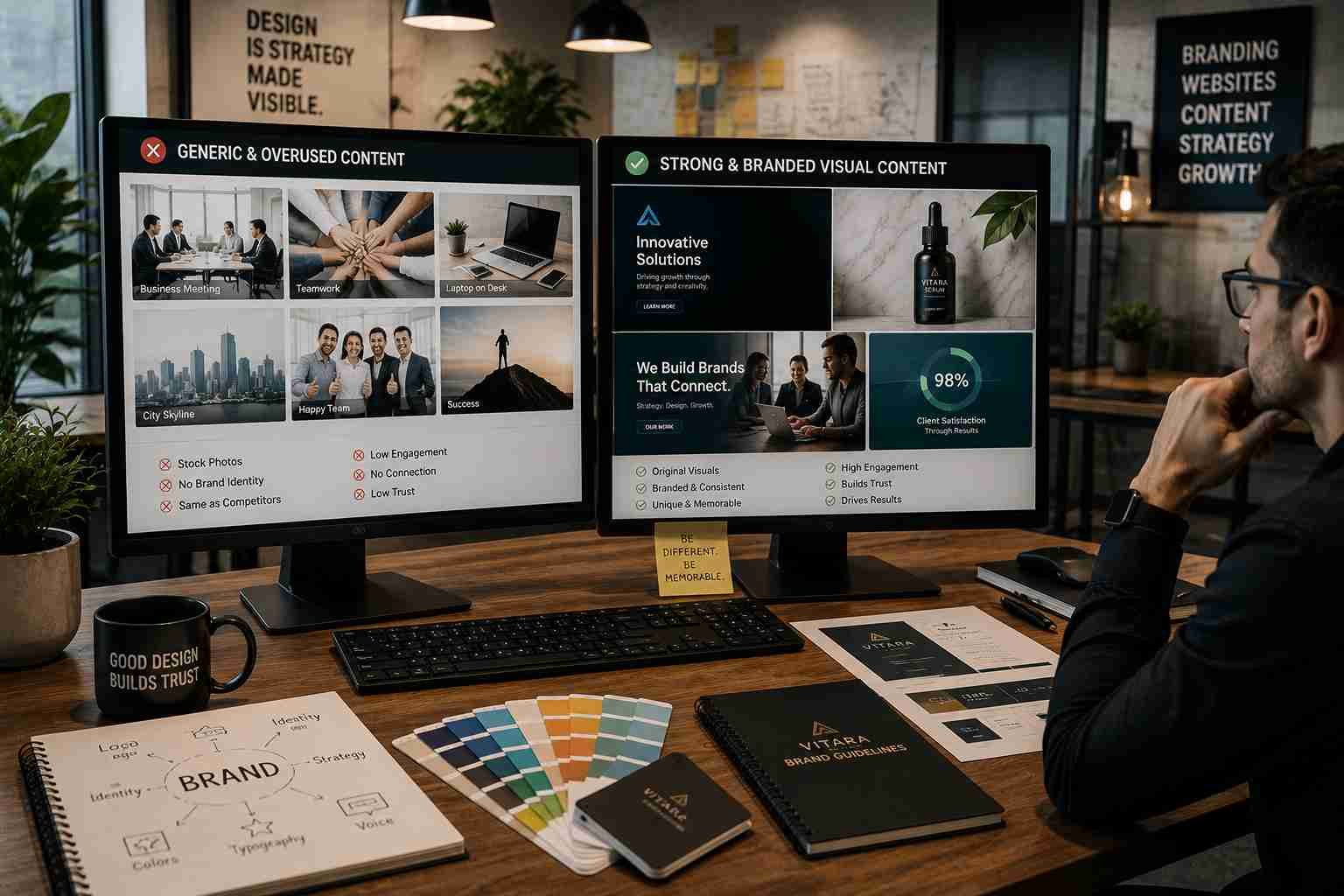 Search engines, and increasingly AI systems, are trained to recognize originality. Yet many business websites still rely on:
Stock photos used by hundreds of competitors
Generic AI-generated graphics with no brand identity
Unedited or poorly paced videos
Inconsistent colours, fonts, and messaging across pages
This creates a trust gap. When a visitor lands on a page that looks interchangeable with a dozen others, they leave within seconds, and that bounce sends a signal to search engines that the content isn't valuable, which further affects website traffic over time.
Trustworthy content and visual credibility aren't just nice-to-haves anymore. They're ranking factors that influence how both human visitors and AI systems evaluate your site.
Why Visual Content Is Now a Website Traffic Driver
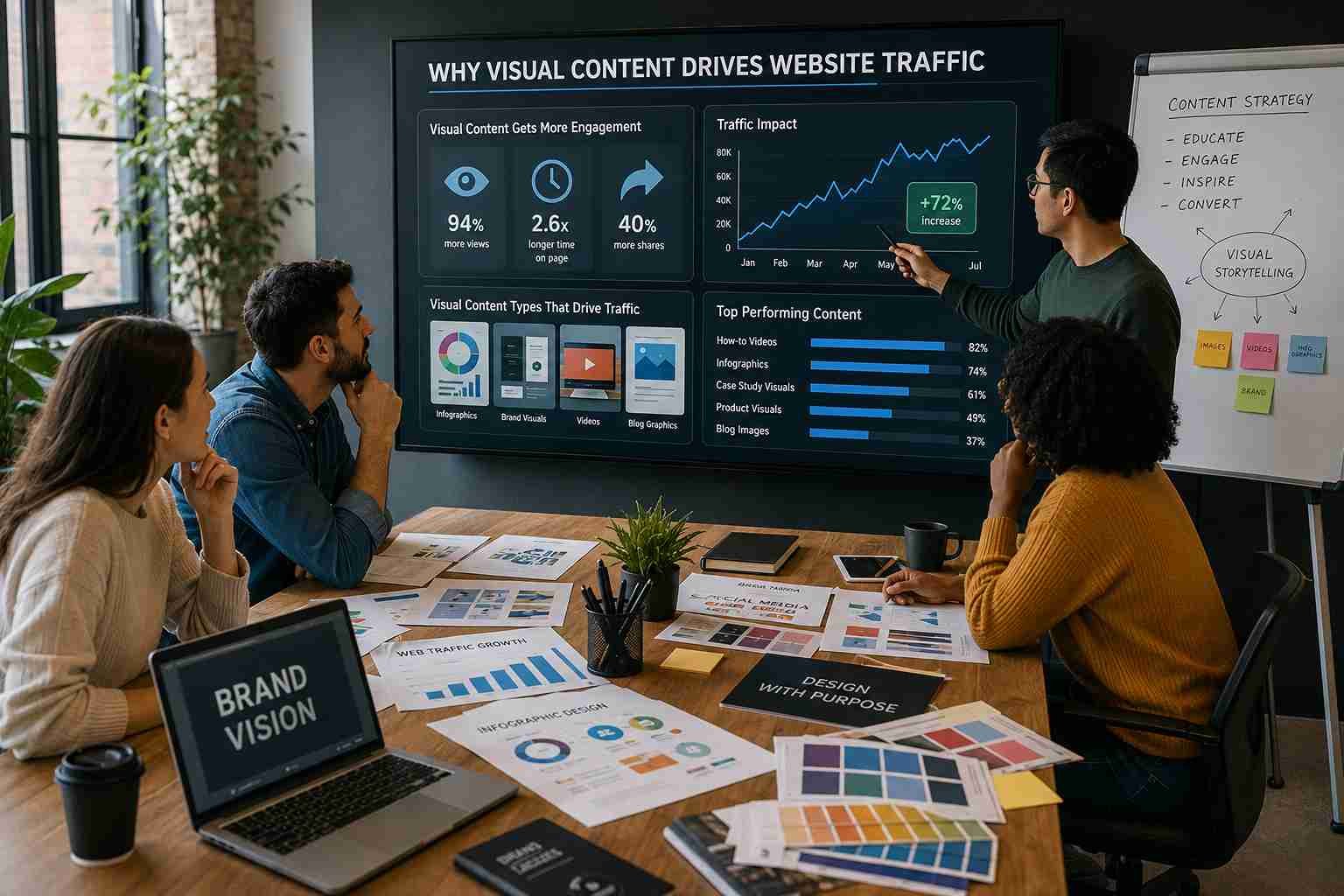 Visual content does something text alone cannot: it communicates instantly. Research on cognitive processing consistently shows that people process images significantly faster than text, which is why visual storytelling has become central to modern content marketing strategy.
Here's how visual content directly supports website traffic and engagement:
1. It increases time on page. Well-designed graphics, embedded videos, and clear website banner design keep visitors scrolling instead of bouncing immediately.
2. It improves user engagement metrics. Search engines track signals like dwell time and interaction. Pages with strong visual content typically perform better on these metrics.
3. It builds brand credibility fast. A professional layout, consistent typography, and polished graphics tell a visitor your business is legitimate before they read a single word.
4. It's harder for AI to replicate. An AI search engine can summarize a paragraph of text. It cannot replicate the experience of a well-produced product demonstration video or an interactive brand visual, which means users still need to visit your site to get that value.
Video Content: A Direct Answer to Declining Website Traffic
Professional video editing has become one of the most effective ways to recover and grow website traffic in 2026. Platforms like YouTube, Instagram, LinkedIn, and TikTok reward video because it keeps users engaged longer than static content.
Effective video formats include:
Promotional video editing for product launches and campaigns
Product demonstration videos that show real use cases
Customer testimonials that build trust through social proof
Short-form educational clips that answer common customer questions
The difference between amateur and professional video editing usually comes down to pacing, motion graphics, sound design, and captioning. Motion graphics in particular help simplify complex ideas like a service process or a product feature into something visually digestible within seconds.
Consistent Branding: The Foundation of Visual Credibility
 Consistent branding is what turns a one-time visitor into a returning customer. When your brand identity design logo, colors, typography, and tone stays uniform across your website, social media, and marketing materials, visitors recognize and trust you faster.
Compare two approaches:
Element | Weak Branding | Strong Branding |
Visuals | Mismatched stock photos | Custom, on-brand graphics |
Typography | Inconsistent fonts | Unified typography system |
Video | Unedited, no structure | Professionally edited with motion graphics |
Social Media | Random post styles | Cohesive brand identity design |
Visitor Trust | Low, high bounce rate | High, longer engagement |
Businesses with strong, consistent branding typically see better website traffic retention because visitors instinctively trust a polished, professional presence over a disorganized one.
Five Practical Ways to Protect and Grow Your Website Traffic in 2026
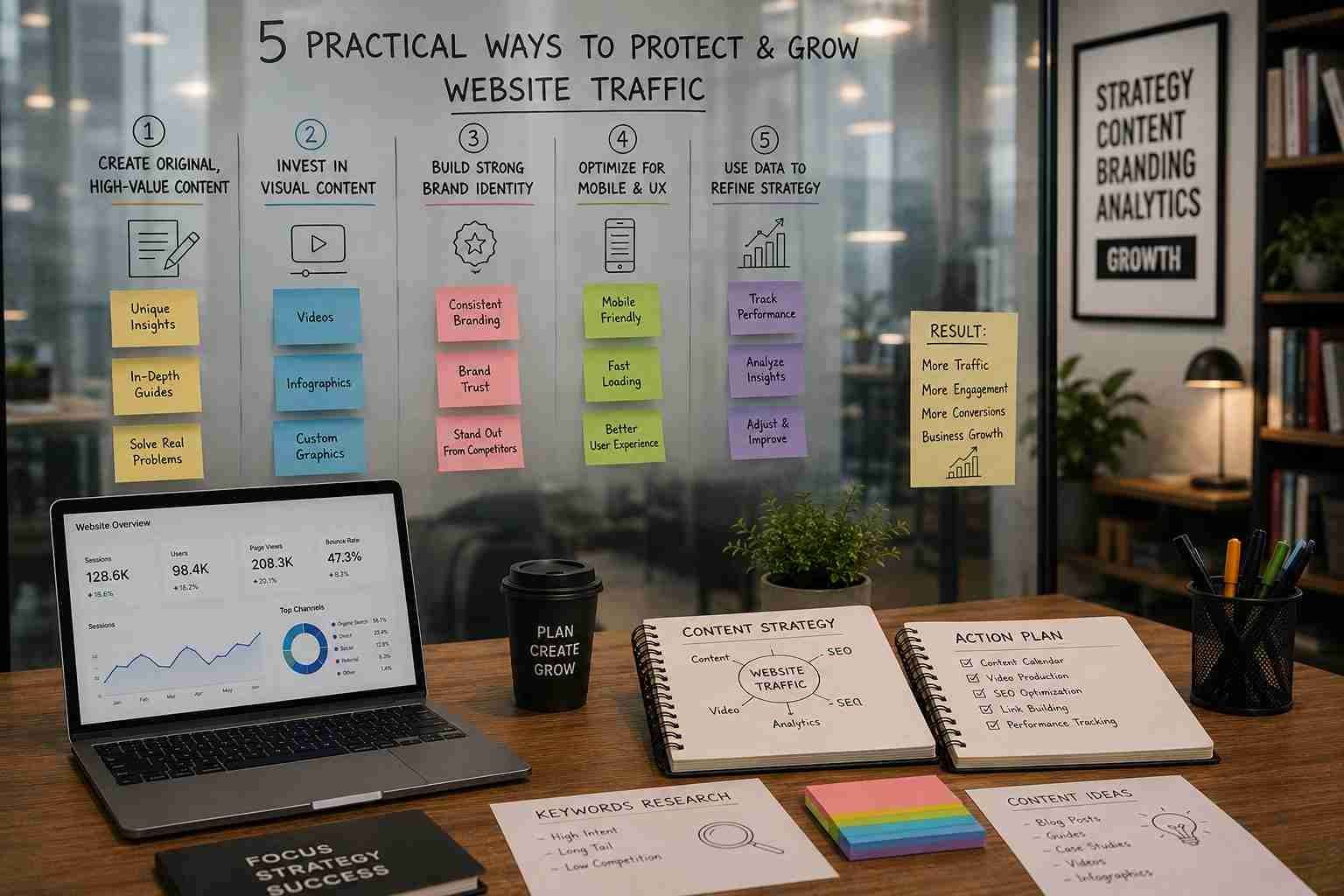 1. Publish original content, not recycled answers. Write from real experience and offer perspectives an AI system can't easily generate.
2. Invest in professional video editing. Even short, well-edited videos outperform long, unedited ones in engagement.
3. Maintain consistent branding everywhere. Your website, social profiles, and marketing assets should look like they belong to the same business.
4. Prioritize mobile-friendly design. Most visitors now discover businesses on their phones, so visual content, including website banner design and YouTube thumbnails, must render cleanly on smaller screens.
5. Focus on quality over publishing frequency. One well-designed, thoroughly researched piece of visual content per week typically outperforms daily low-effort posts.
How Businesses Are Using Visual Content to Offset AI Search Impact
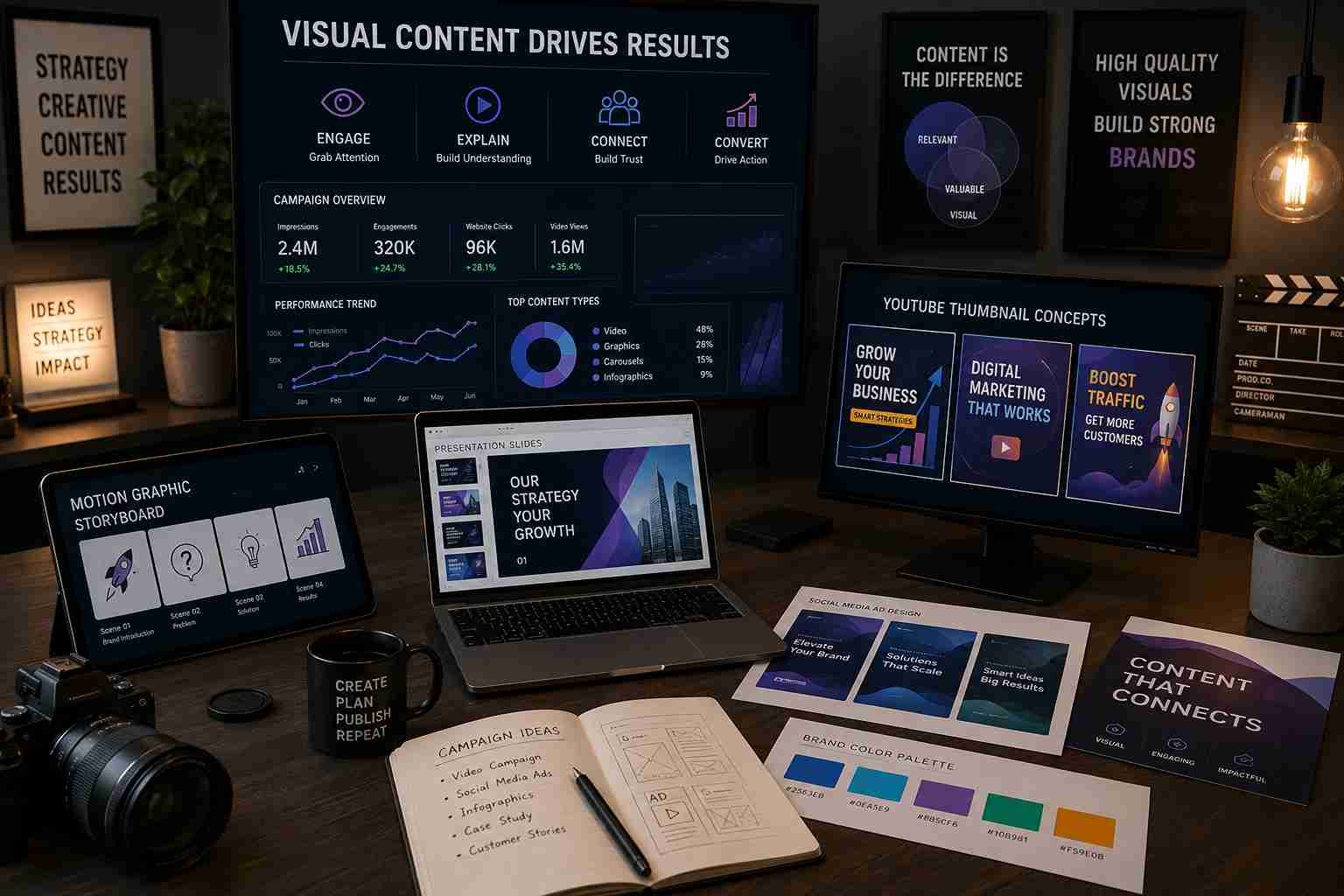 Forward-thinking businesses are pairing content marketing strategy with visual production in a way that directly targets the gap left by AI search summaries. This includes:
Advertising graphics designed specifically for paid and organic campaigns
Presentation design for sales decks and client pitches
Custom YouTube thumbnails that improve click-through rates
Motion graphics that explain services faster than a paragraph of text could
This approach doesn't fight against AI-powered search it works alongside it. AI systems can summarize facts, but they cannot replace the trust, personality, and credibility that strong visual content builds for a real business.
Direct Answer: Does Google AI Reduce Website Traffic?
Yes, Google's AI search experience can reduce website traffic for simple, factual queries because it answers many questions directly in search results. However, it does not eliminate the need for websites. Businesses that offer original content, strong visual credibility, and a distinct brand identity design continue to earn clicks, because AI-generated summaries cannot replicate demonstrations, testimonials, or a genuine brand experience. The businesses most affected are those relying on generic, unoriginal content; the businesses least affected are those investing in high-quality visuals and consistent branding.
FAQ Section
 Will AI replace websites? No. AI search engines can answer simple, factual questions directly in search results, which reduces some website traffic, but websites remain essential for transactions, trust-building, product demonstrations, and original content that AI can't fully replicate. Businesses still need a website to convert visitors into customers.
Why is marketing important in business? Marketing is how a business communicates its value, builds customer engagement, and stays visible in a competitive market. Without a clear content marketing strategy, even great products struggle to reach the right audience or build lasting brand credibility.
Can video editing be replaced by AI? AI tools can automate basic cuts, captions, and simple edits, but professional video editing still requires human judgment for storytelling, pacing, motion graphics, and brand tone. AI can speed up parts of the process, but it can't fully replace the creative decisions that make promotional video editing effective.
Why is social media marketing important for business? Social media marketing extends your visual content and brand identity design beyond your website, helping you reach new audiences, build customer engagement, and drive traffic back to your site through consistent, shareable content like short-form video and graphics.
Why is branding important to a business? Branding creates instant recognition and trust. Consistent branding, including typography, colour, and visual tone, signals professionalism and credibility, making visitors more likely to choose your business over a competitor with a generic or inconsistent online presence.
Conclusion
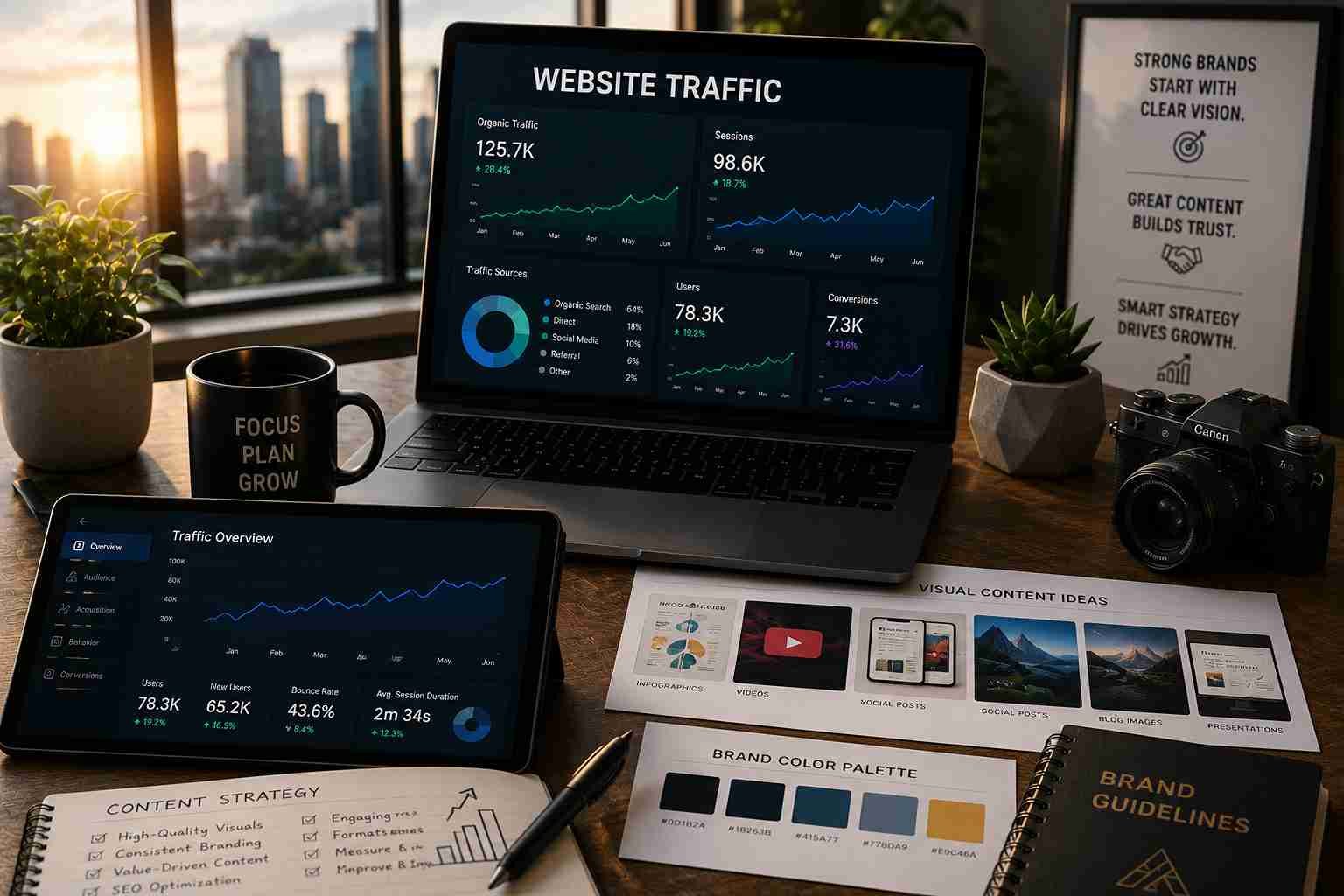 Google's AI-powered search engine is reshaping how people find information, and website traffic patterns are shifting as a result, but this isn't a dead end for businesses. It's a signal to invest in what AI can't replicate: original content, professional video editing, and a consistent, credible brand identity.
Businesses that treat visual content as a core part of their content marketing strategy, not an afterthought, are the ones protecting their website traffic and building lasting customer engagement in 2026.
If your website traffic has been slipping, the most effective next step isn't chasing algorithm updates it's strengthening the visual experience your business offers. Start with one high-quality video or a refreshed brand identity design, and build outward from there.
The Complete SEO Guide for New Websites (2026)
AI vs Human Creativity: Why Professional Video Editors & Graphic Designers Still Matter in 2026
Must-Have Features for a Successful E-Commerce Website
How Professional Video Editing & Graphic Design Can Transform Your Brand in 2026