
How to Improve Checkout Experience and Reduce Cart Abandonment
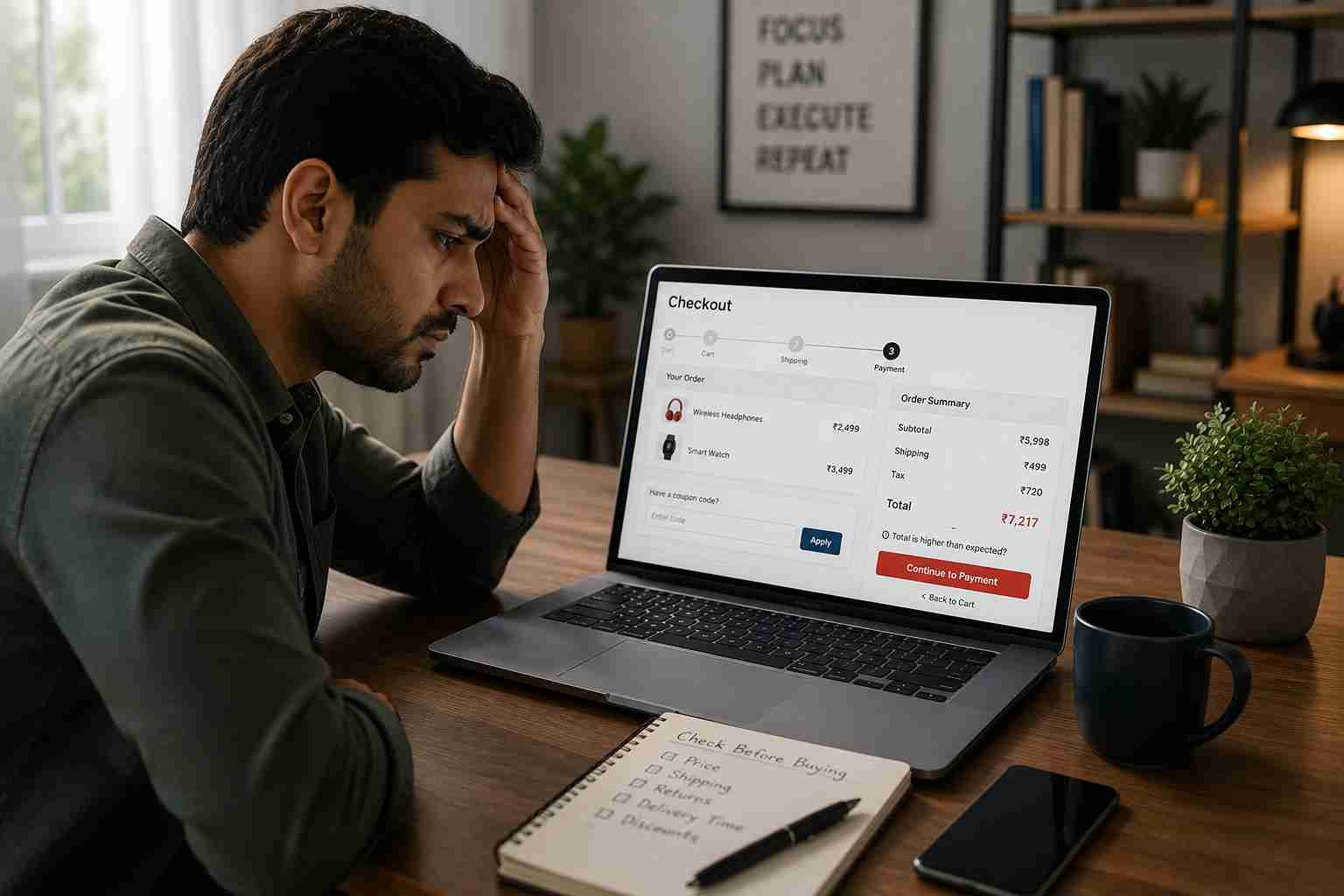 If you run an online store, you already know the frustration: a customer browses, adds a product to their cart, and then vanishes right before paying. This is called an abandoned cart, and it's one of the most expensive problems in e-commerce. Studies from the Baymard Institute have found that the average online cart abandonment rate hovers around 70%, meaning most stores lose the majority of ready-to-buy customers at the final step. The good news is that how to reduce abandoned carts almost always comes down to one thing: improving the checkout experience.
This guide breaks down exactly why customers abandon carts and gives you a practical, step-by-step framework to fix it.
What Is Cart Abandonment (And Why It Happens)
An abandoned cart occurs when a shopper adds items to their shopping cart but leaves the website before completing the order. It's a lost sale that already had buying intent the customer wanted the product, but something in the checkout process stopped them.
Common causes include:
Unexpected extra costs at the final step
A long, confusing checkout process
Slow website page load speed
No guest checkout option
Limited payment methods
Lack of visible trust badges
A frustrating checkout form
Understanding these triggers is the first step toward fixing them and every business owner asking "how to reduce abandoned carts" should start here.
Why Checkout Experience Directly Impacts Revenue
By the time a shopper reaches checkout, they've already decided to buy. A weak checkout experience at this stage doesn't just lose one sale it damages customer trust and brand reputation, and it raises your customer acquisition cost because you're paying for traffic that never converts.
A strong checkout experience, on the other hand, does more than close the sale. It encourages repeat purchases, lowers support tickets, and turns first-time customers into loyal buyers.
12 Ways to Improve Checkout Experience and Reduce Cart Abandonment
1. Simplify the Checkout Process
A cluttered checkout process with too many fields is a top reason for an abandoned cart. Ask only for essential details: name, phone number, email, address, and payment info. Use autofill wherever possible, show a clear progress bar, and remove distracting pop-ups.
2. Offer Guest Checkout
Forcing account creation is one of the fastest ways to lose a sale. Guest checkout lets first-time customers buy without friction. You can still invite them to create an account after the purchase, for example: "Save your details to track your order faster next time."
3. Show All Costs Upfront
Hidden shipping fees or taxes revealed only at the last screen are a classic cause of cart abandonment. Break down the total cost early: product price, shipping, tax, discount, and grand total. Transparency builds customer trust before the customer even reaches the payment button.
4. Provide Multiple Payment Options
Every shopper has a preferred way to pay. Support UPI, cash on delivery, net banking, wallets, EMI, and buy now pay later options alongside standard credit and debit cards. For Indian e-commerce businesses especially, UPI and COD remain top choices.
5. Add Secure Payment and Trust Badges
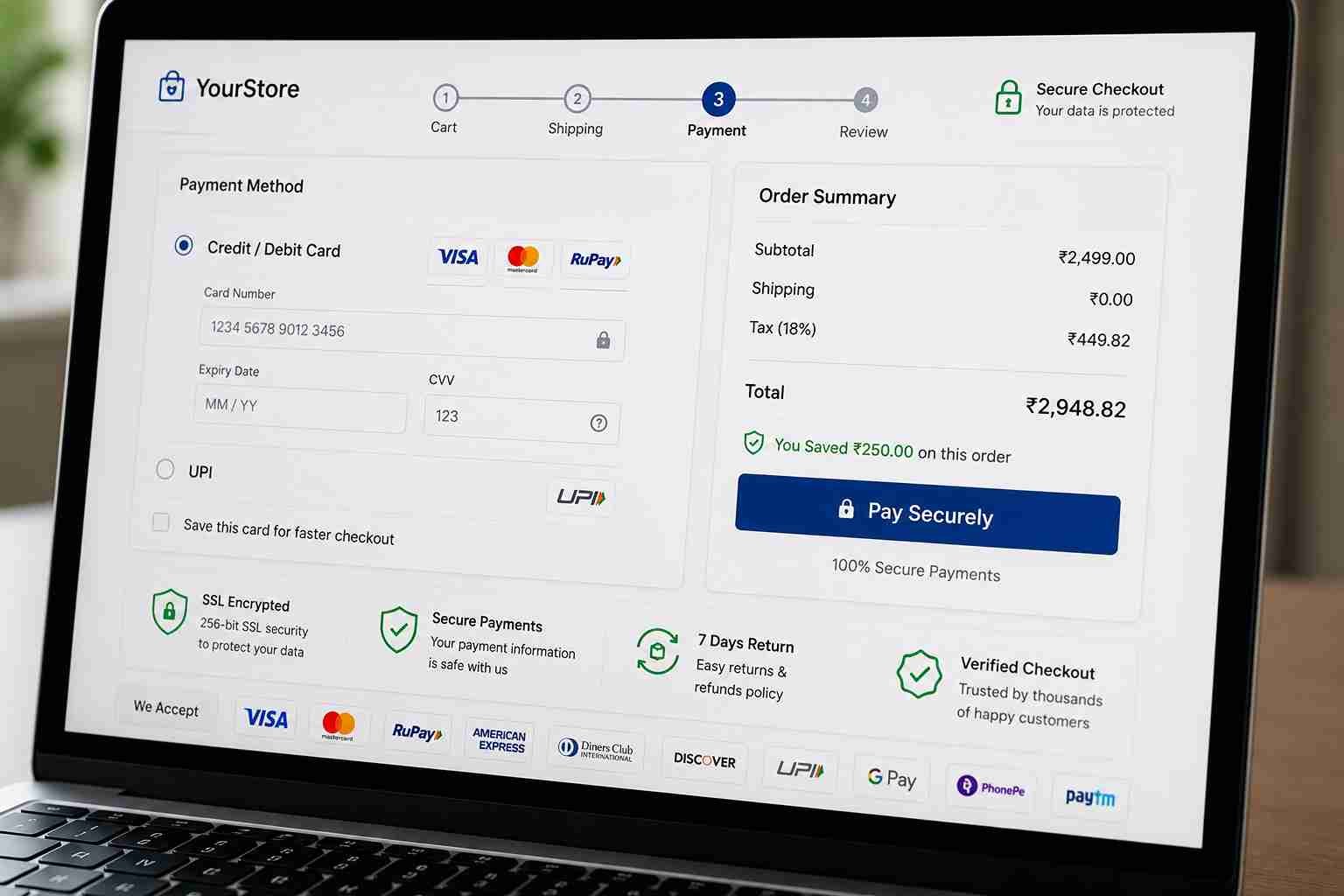 Shoppers hesitate to share card details on a site that feels unsafe. Displaying secure payment/trust badges, an SSL certificate indicator, and a visible return policy/refund policy link reassures buyers that their information and money is safe.
6. Optimize for Mobile Shoppers
Most online shopping today happens on a phone. A checkout page that isn't optimized for mobile-friendly design will cost you sales. Use large tap-friendly buttons, a sticky checkout button, short forms, and mobile-optimized payment options.
7. Fix Website Page Load Speed
A slow website page load speed at checkout creates doubt shoppers assume the payment failed or the site is unreliable, and they leave. If you're wondering how to improve page load speed, start with these fixes:
Compress images and use a lightweight design
Enable browser caching
Remove unnecessary third-party scripts
Choose fast, reliable hosting
Test load speed regularly with tools like Google PageSpeed Insights
8. Make the Checkout Form Error-Proof
A confusing checkout form that shows vague errors ("Invalid input") frustrates users. Instead, give specific guidance "Please enter a valid 10-digit mobile number" and highlight the exact field that needs fixing. Use address autofill to speed things up further.
9. Simplify Coupon Codes
Sending customers to Google to "find a coupon code" is a checkout killer many never return. Show active offers directly on the cart page or use auto-apply coupons so shoppers never leave your online store mid-purchase.
10. Display Delivery Timelines Clearly
Uncertainty about delivery dates causes hesitation. Show clear order tracking details and estimated delivery dates (e.g., "Delivery by Monday, 15 July") to remove doubt and encourage checkout completion.
11. Use Cart Recovery Campaigns
Even a great checkout experience won't save every sale. This is where an abandoned cart email, along with WhatsApp reminders/SMS reminders, retargeting ads, and exit-intent offers, bring shoppers back. A simple message like "You left something in your cart complete your order before it sells out" can recover a meaningful share of lost sales.
12. Offer Real-Time Customer Support
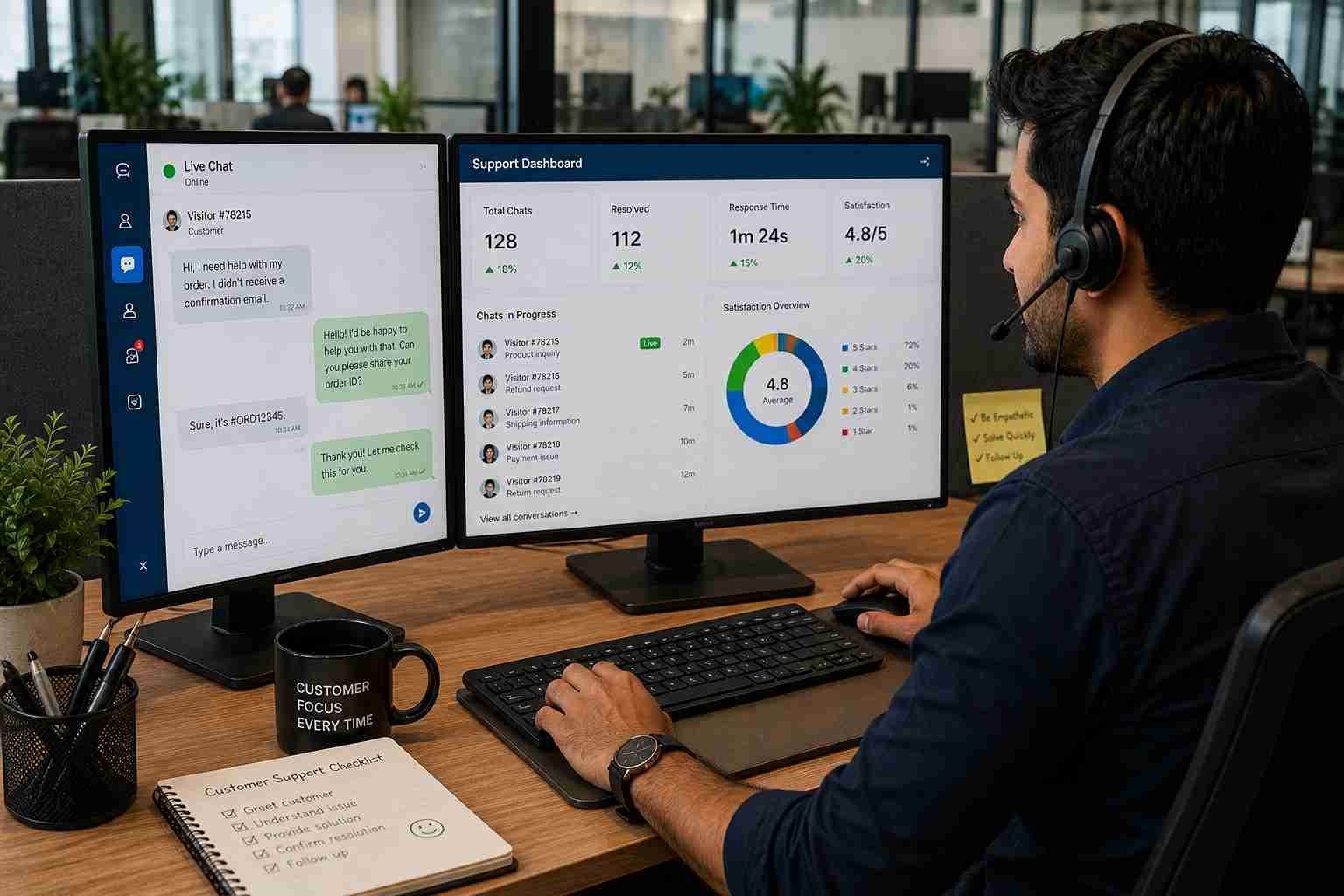 Doubts about sizing, returns, or delivery often stop a purchase cold. Adding live chat, WhatsApp support, or a visible FAQ section at checkout can resolve hesitation instantly and save the sale.
Direct Answer: How Do You Reduce Cart Abandonment?
To reduce cart abandonment, focus on removing friction at every step of checkout: offer guest checkout, display all costs upfront, support popular payment methods, speed up your website, add trust badges, simplify your checkout form, and follow up abandoned sessions with a well-timed abandoned cart email or SMS reminder. Businesses that apply these fixes together rather than in isolation see the biggest drop in abandoned cart rates.
Checkout Fixes vs. Impact: Quick Comparison
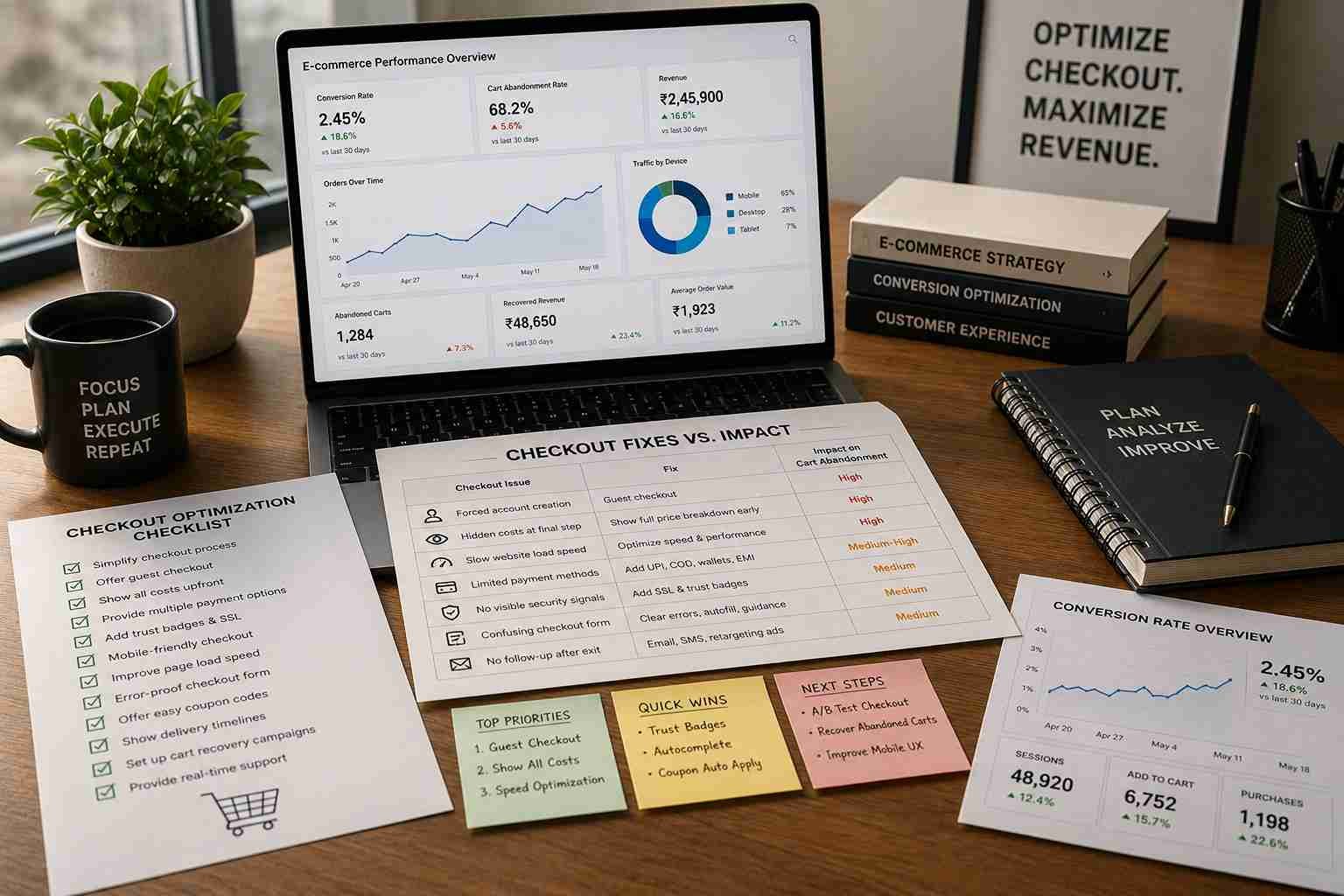
Checkout Issue | Fix | Impact on Cart Abandonment |
Forced account creation | Guest checkout | High |
Hidden costs at final step | Show full price breakdown early | High |
Slow website page load speed | Compress images, use caching, better hosting | High |
Limited payment methods | Add UPI, COD, wallets, EMI | Medium-High |
No visible security signals | Add SSL certificate + trust badges | Medium |
Confusing checkout form | Clear error messages, autofill | Medium |
No follow-up after exit | Abandoned cart email, SMS, retargeting ads | Medium |
Common Mistakes That Increase Cart Abandonment
Forcing account sign-up before purchase
Revealing shipping costs only at the last step
Ignoring mobile-friendly design
Offering too few payment methods
Slow, unoptimized checkout pages
No abandoned cart email or reminder system
Avoiding these mistakes is often just as valuable as adding new features.
The Business Impact of a Better Checkout Experience
Improving your checkout experience doesn't just recover lost sales it strengthens your entire e-commerce business. Expect to see higher conversion rates, more repeat purchases, lower customer acquisition cost, and stronger brand reputation over time. Even a small percentage improvement in checkout completion can translate into meaningful revenue growth, since you're converting traffic you've already paid to acquire.
FAQ Section
1. What is an abandoned cart? An abandoned cart happens when a shopper adds products to their shopping cart but leaves the online store without completing payment.
2. How to reduce abandoned carts most effectively? The most effective way to reduce abandoned carts is combining guest checkout, transparent pricing, multiple payment options, faster page load speed, and abandoned cart email follow-ups.
3. Why does checkout experience affect conversion rate so much? Because shoppers at checkout already have buying intent, friction at this final stage directly blocks a sale that was otherwise ready to close.
4. Does website page load speed really affect cart abandonment? Yes. Slow-loading checkout pages create doubt about whether payment will succeed, causing many shoppers to abandon the process entirely.
5. Are abandoned cart emails worth setting up? Yes. Abandoned cart emails, combined with SMS and WhatsApp reminders, are one of the most cost-effective ways to recover lost sales without new ad spend.
6. What payment methods reduce cart abandonment in India? UPI, cash on delivery, net banking, wallets, and EMI options are especially important for reducing cart abandonment among Indian shoppers.
7. How do trust badges reduce cart abandonment? Secure payment and trust badges, along with a visible SSL certificate and return policy, reassure shoppers that their payment and personal data are safe, reducing hesitation at checkout.
Conclusion
Cart abandonment isn't a mystery it's usually the predictable result of a checkout process that asks too much, explains too little, or loads too slowly. By simplifying your checkout form, offering guest checkout, displaying costs honestly, supporting the payment methods your customers already trust, and following up with a well-timed abandoned cart email, you can turn a leaky checkout into a reliable revenue engine.
Start with one fix this week, whether it's adding guest checkout or improving your page load speed and measure the difference in your cart abandonment rate. Small changes at checkout consistently produce outsized returns for online stores.
Must-Have Features for a Successful E-Commerce Website
How We Built an Agentic AI App in 48 Hours
AI in Web Development: How Smart Websites Help Businesses Grow in 2026
Web & Mobile Application Development: How to Build Fast, Secure, and Scalable Digital Experiences
How CMS Platforms Simplify Website Management in 2026
Progressive Web Apps (PWAs): Future of Web Experiences